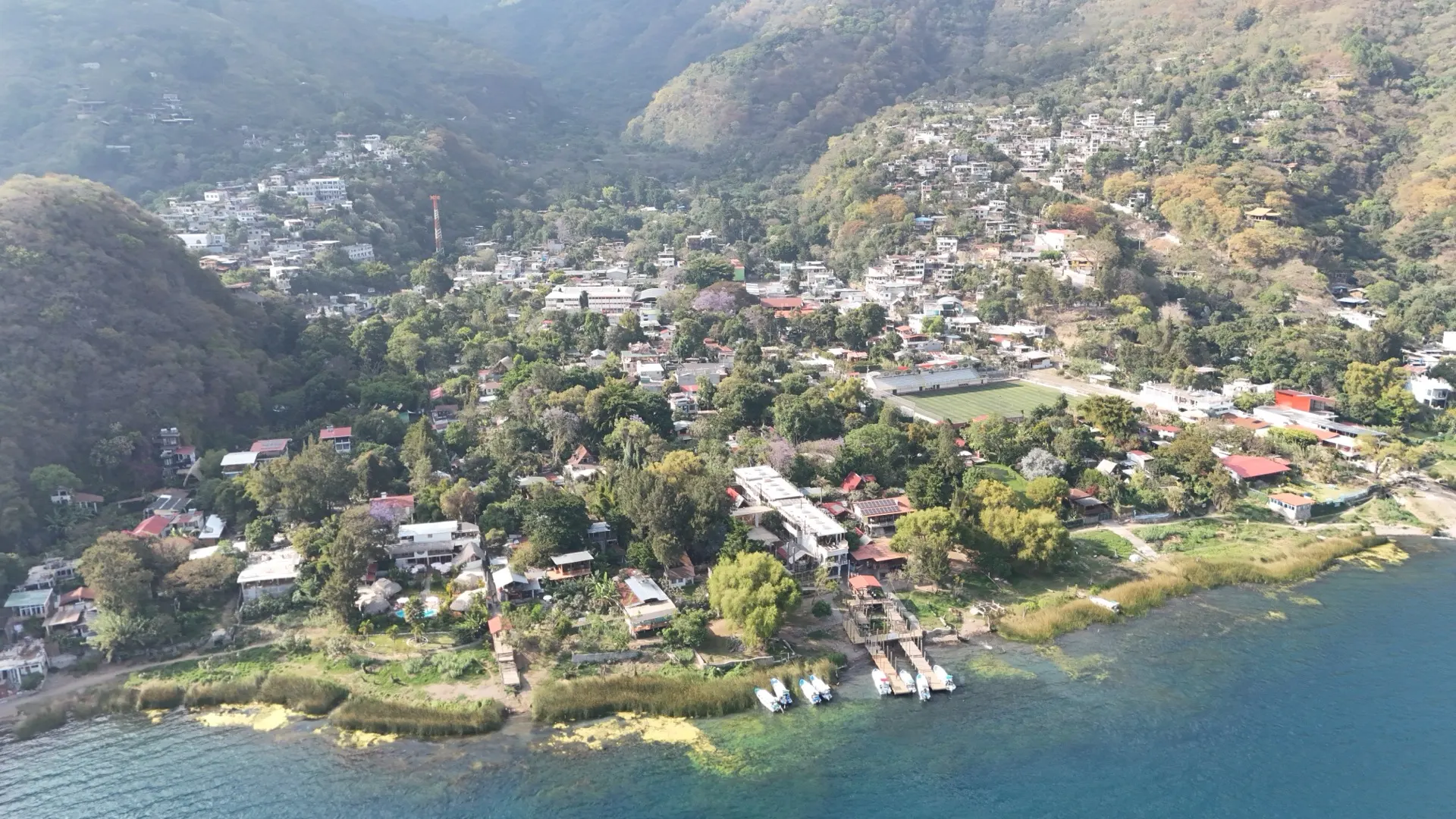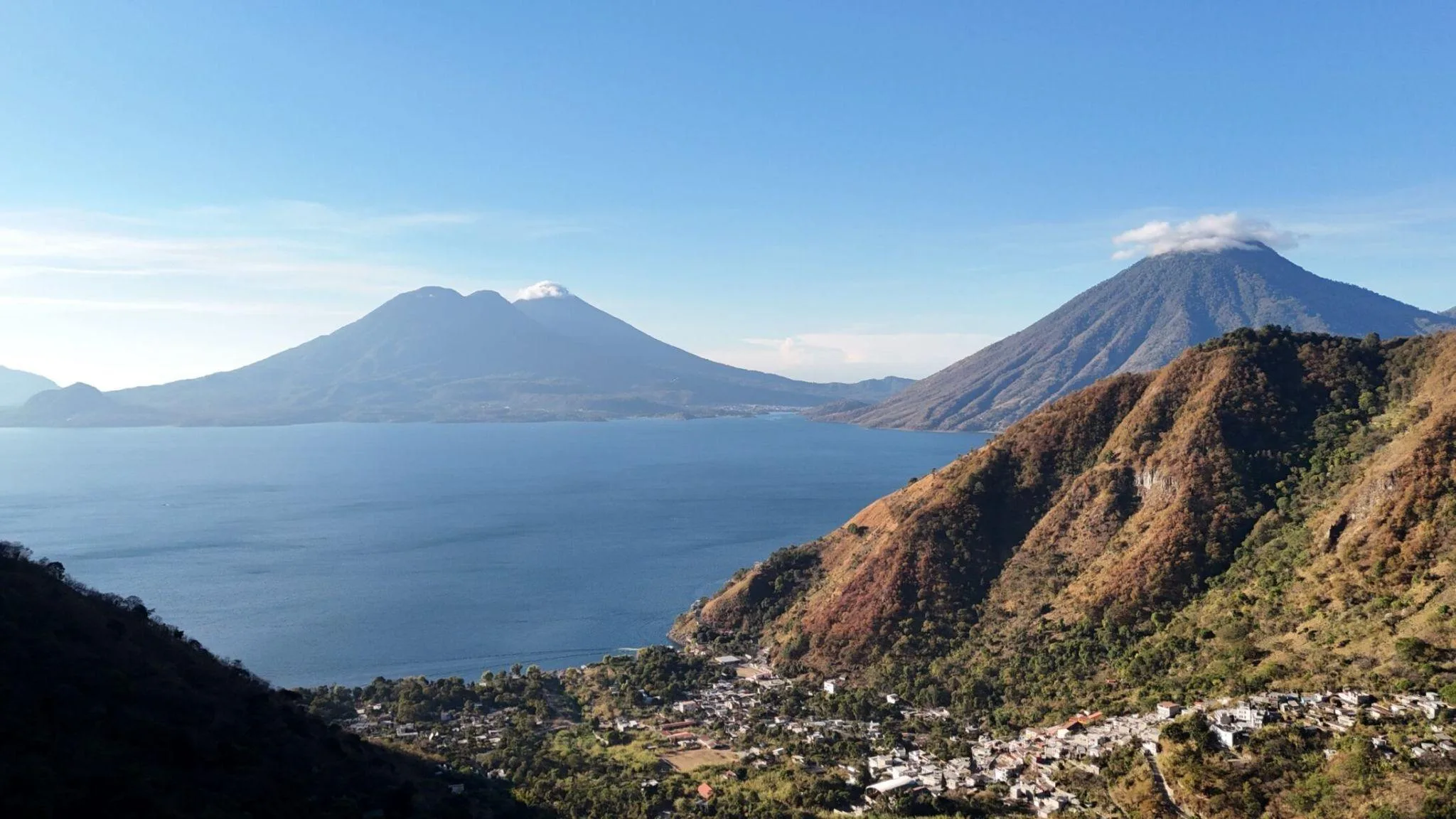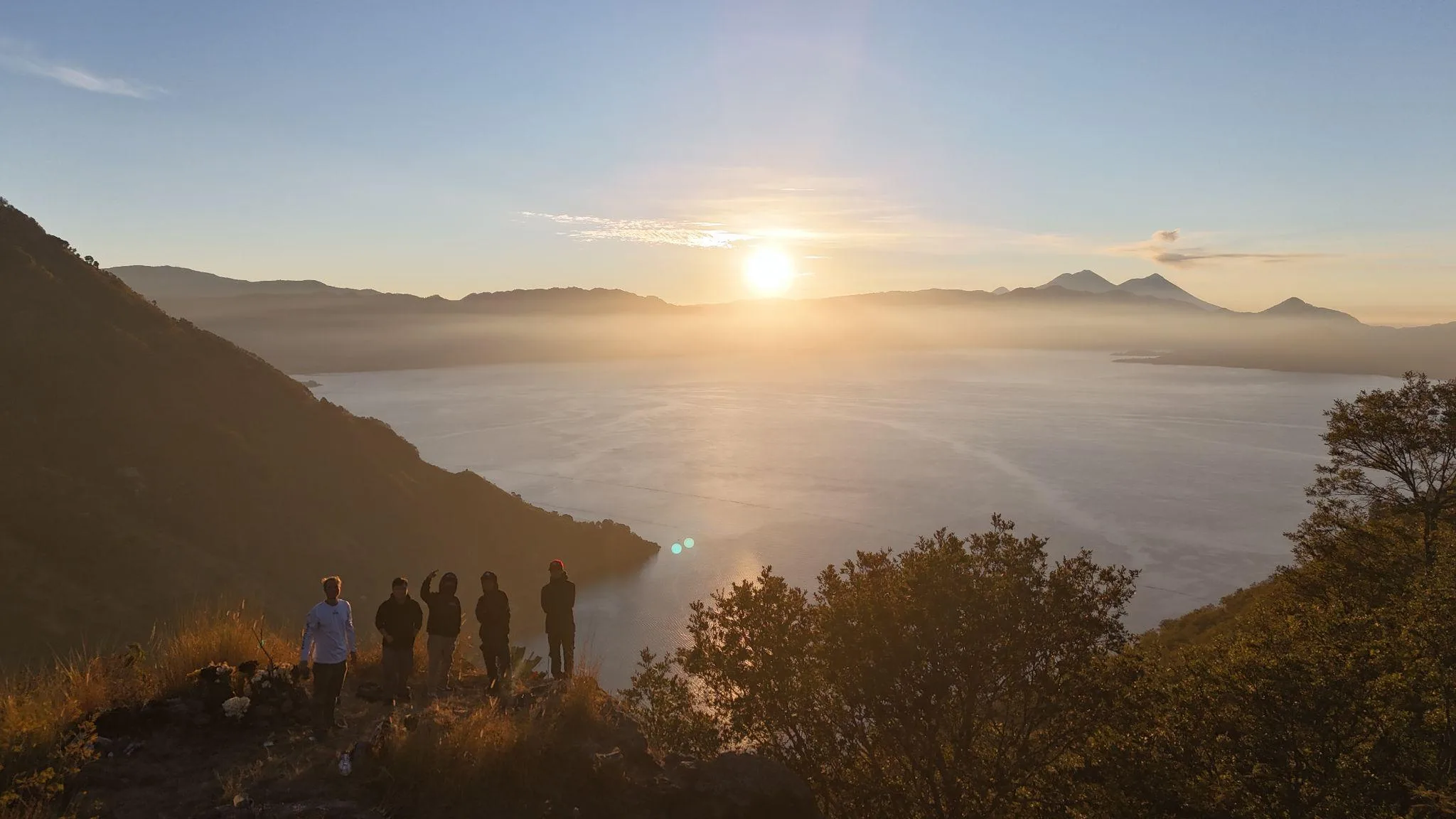
The farms, the food, the community tensions, the rural rhythm — everything a serious buyer needs to know about daily life in Tzununá before they commit.
Our Tzununá market analysis made the investment case for the village. This post makes a different argument: that Tzununá is worth buying into not just because the numbers work, but because the daily texture of life here is unlike anything else on the lake. That texture has its rough edges as well as its extraordinary qualities, and serious buyers deserve to know about both.
The village Terry LaMarre first entered in 1996, where children dove into the bushes at the sight of a foreigner and few people spoke Spanish, no longer exists. But the valley that replaced it is something genuinely compelling: a living experiment in what happens when traditional Maya agricultural culture, international permaculture idealism, wellness tourism, and a growing expat community all occupy the same steep hillsides simultaneously. It does not always work smoothly. When it does, it is one of the best places on the lake.
The Farming Legacy: From Terry to Atitlan Organics to Today
Tzununá has been a farming village for as long as anyone can remember. The terrain is steep, river-fed, with rich volcanic soil producing some of the most varied agricultural abundance on the lake. The Kaqchikel Maya who have worked these hillsides for generations knew what they had. When LaMarre arrived in 1996 looking for land with a waterfall and found it, he was not discovering unused territory. He was entering an active agricultural community that simply had no foreigners in it yet.
LaMarre's original permaculture farm, 1.5 cuerdas purchased for Q3,000, later expanded, then sold in 2007 to a young couple and became the foundation of Atitlan Organics, which grew over the following decade into one of the most recognized sustainable agriculture operations in Central America. Atitlan Organics introduced international volunteers, biodynamic methods, and a model of land stewardship that influenced an entire generation of buyers and farmers in the valley. An aspiring apprentice of LaMarre, who purchased the operation in the 2010s and also owns Bambu House and several other significant Tzununá properties, has maintained the farm's reputation. It has quietly been listed for sale for about two years, waiting for the right buyer while it represents both a genuine agriculture asset and a piece of the village's foundational history.
The farming tradition did not end with Atitlan Organics. Granja Tzikin, run by Neal Hagerty, has become one of the most vibrant community anchors in the village. It is a working permaculture farm that serves farm-to-table meals, runs volunteer programs, and hosts themed social events throughout the week. On any given evening, Granja Tzikin might be running a fermentation workshop, a community dinner, or an open mic that draws musicians from villages all around the lake. It is one of the clearest expressions of what Tzununá does better than anywhere else: productive land and community life woven together.
WuWei Village: An Intentional Community Investment Without Parallel
On the plateau above Tzununá, set back from the main development corridor and accessible by footpath, WuWei Village occupies a category of its own on the lake. It is not simply a resort, not a retreat center, and not a conventional residential development. It is an intentional community of off-grid, spiritually oriented owners who share a set of values around earth care, creative expression, and conscious living. It has assembled something that no other community at Lake Atitlán has achieved: a coherent master plan backed by the largest single land assemblage in Tzununá.
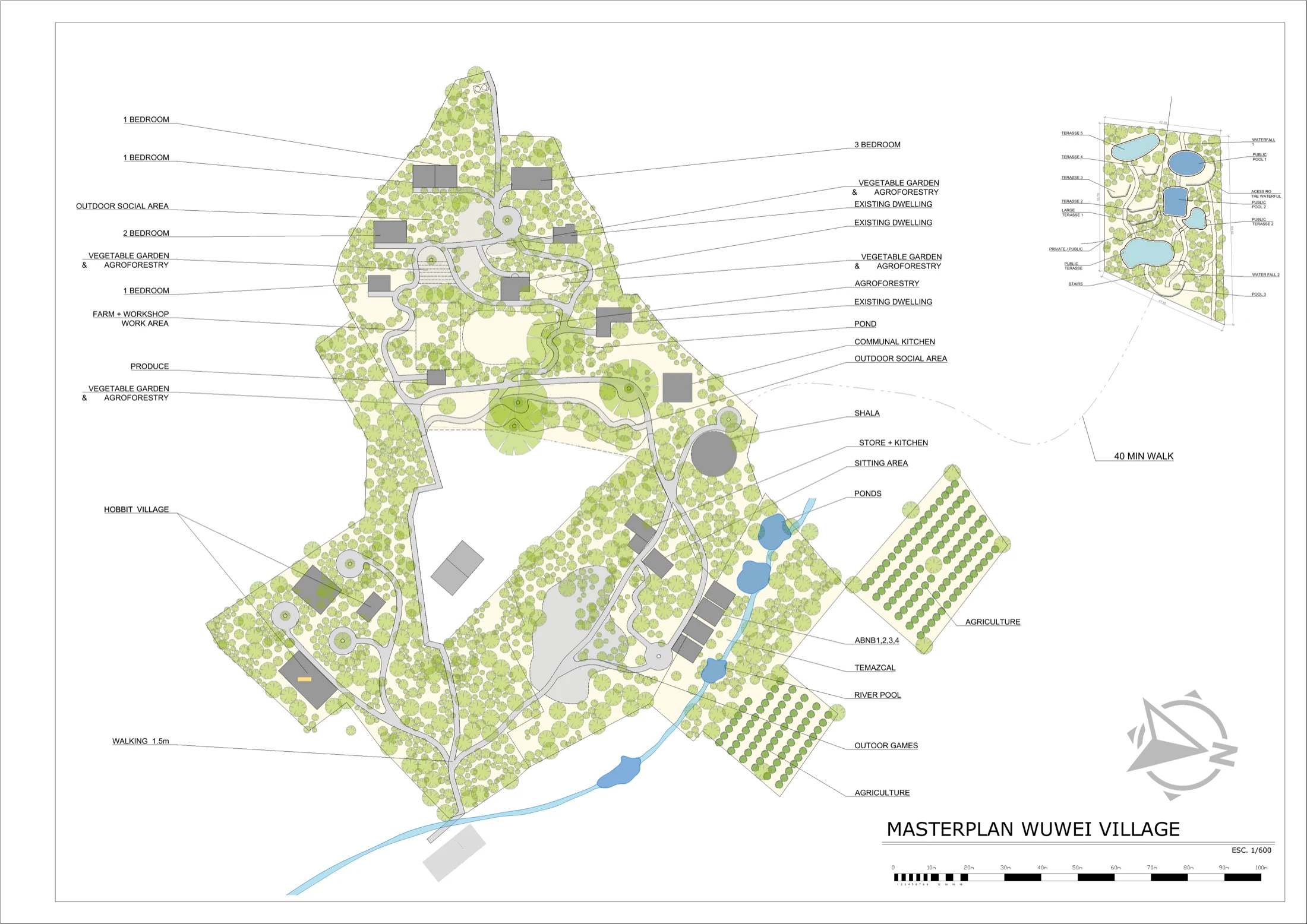
WuWei has assembled over 2.5 hectares of continuous land, incorporating three waterfalls within a forty-five minute walk and year-round river access that provides clean spring water for generations. Three homes are already built. This is not a community raising capital for an idealistic vision of the future — it is being built in real time, on land that is already assembled and productive, and investors can join this journey today.
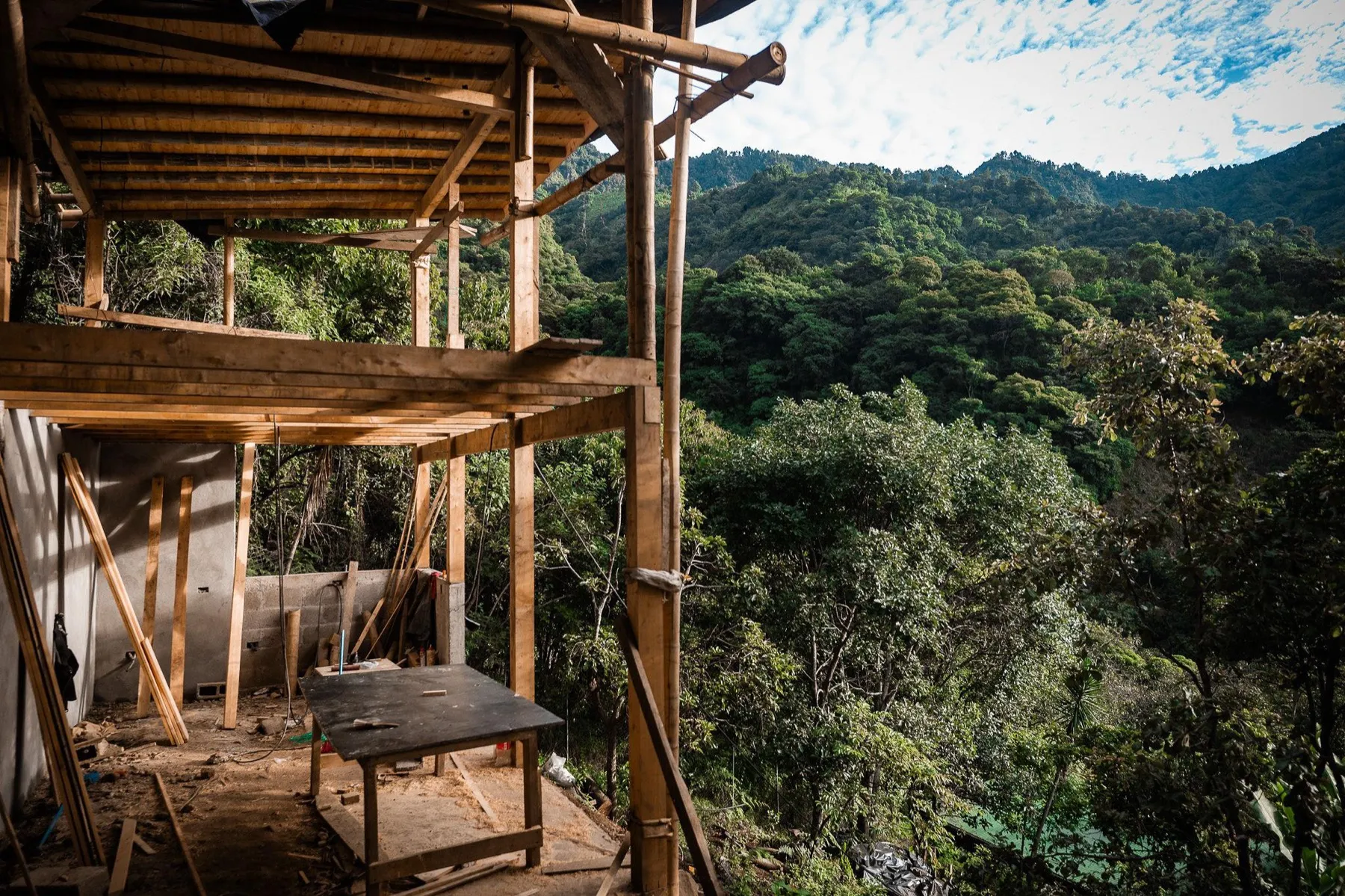
What makes the WuWei investment model distinctive is its structure. Rather than purchasing individual plots of land, investors buy shares in the community that appreciate with capital improvements from the master plan, the value of the land assemblage, the quality of life being created, and the exclusivity of belonging to Lake Atitlán's most organized off-grid permaculture community investment. The plateau position makes it low-risk for flooding. The assembled land scale creates a defensible asset that individual parcel buyers cannot replicate.
Share prices are currently in the low $20s USD, with a multi-year capital improvement phase ahead that will activate the land and drive collective appreciation. The investment carries a minimum five-year hold and is best understood as a multi-generational investment in sustainable community living rather than a short-term play. For buyers who have dreamed of ownership in an off-grid permaculture community but have not known where to start, WuWei offers the rare combination of an experienced founding team, assembled land, existing infrastructure, and a community of like-minded co-investors already in place.
Where to Eat, Where to Gather: The Village's Five Foreign-Friendly Restaurants
Tzununá is not a restaurant village. It has five foreign-friendly restaurants — a number that feels right for the village's size and character, and would feel sparse to anyone expecting San Pedro or San Marcos. The five are not interchangeable, and knowing what each offers matters for daily life here.
Trece Cielos is the one you end up at repeatedly because the food is reliable, the atmosphere is easy, and Tom, the owner, is the kind of person who makes a community feel like a community. His kitchen is a converted school bus that required over twenty men and two full days to haul up to its current perch on the hillside. It is both eccentric and charming. Inside, hummingbirds feed above your head in the plants growing along the ceiling while you sip cacao. Trece Cielos is the gathering point for the village's international community in the way that every small place needs one gathering point.
Granja Tzikin doubles as a farm and restaurant, offering farm-to-table meals served against a backdrop of productive gardens, with the kind of food quality that makes the walk up the hill worth it every time. The themed social events — fermentation nights, community dinners, open mic evenings — make it more than a restaurant; it is the village's community calendar.
Love Probiotics is a kombucha shop that transforms on Fridays into a community pizza day, easily one of the most reliable weekly social anchors in the village. In a place without much organized social infrastructure, a Friday pizza tradition is more valuable than it sounds.
The remaining two restaurants round out the options without defining the village. The honest summary: five good restaurants is enough if you cook at home, plan around the one Sunday farmers market, and embrace the reality that Tzununá is a place that rewards self-sufficiency over convenience. Buyers who need a high density of dining options should look at San Pedro, San Marcos, or Panajachel.
The Sunday farmers market deserves specific mention because it is the only one of the week, which means that food planning in Tzununá has a cadence that new residents have to learn. Come Sunday and stock well; the week's fresh produce, eggs, and local goods flow through that market. Miss it and you are improvising until the following Sunday or arranging delivery from San Marcos.
What the Village Gets Right: Health, Community, and the Café
Tzununá punches above its weight in community infrastructure in ways that are not obvious from the outside.
Café Tzununá is more than a coffee shop — it is a genuine non-profit community anchor that provides a gathering space, supports local employment, and contributes to the social fabric of the village in the way that good third places do everywhere. It is here that our colleague at Atitlán Properties, Antonio Semaj, spends his Saturdays teaching English to local children.
The village health clinic is one of the best on the lake. It provides free checkups and prescriptions to both Maya residents and foreigners alike — a model of community health access that is rare in rural Guatemala and that reflects the genuine cross-cultural investment that has characterized the best of what the international community has brought to Tzununá. For full-time residents and especially families, the quality of local health access matters more than most buyers anticipate when evaluating a village.
Where It Gets Complicated: Gaia, the Little America, and the Noise Question
Tzununá is an honest village, which means this post has to be honest about the frictions that come with its growth.
Gaia Dance Temple and Sunday
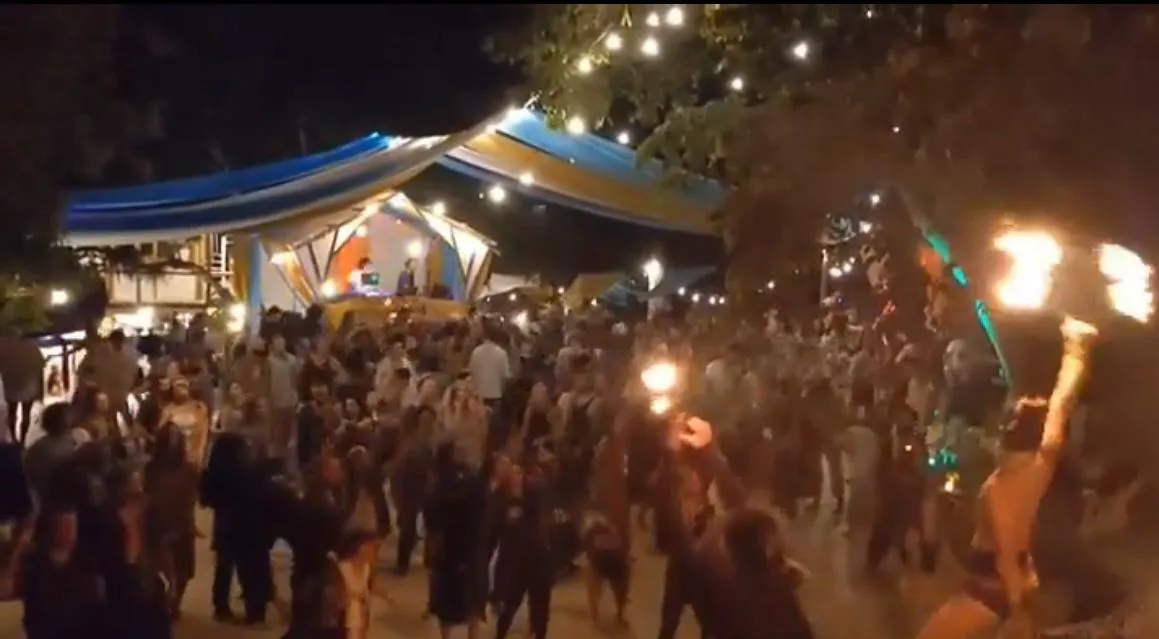
The Gaia Dance Temple — a dance and music venue that has become a significant draw for the international wellness and transformational community — has also brought a dimension to Tzununá that not everyone welcomes. Sunday is traditionally the most sacred day of the week in a Kaqchikel Maya Christian community. It is church day. The Gaia Dance Temple's Sunday programming, including amplified music extending to 8pm, has created genuine friction with the traditional community for whom Sunday morning noise is not a minor inconvenience but a conflict with deeply held values.
This tension is real and ongoing. Buyers considering properties near the Gaia Dance Temple should understand the acoustic reality on weekends and the social dynamic it has created.
The Little America
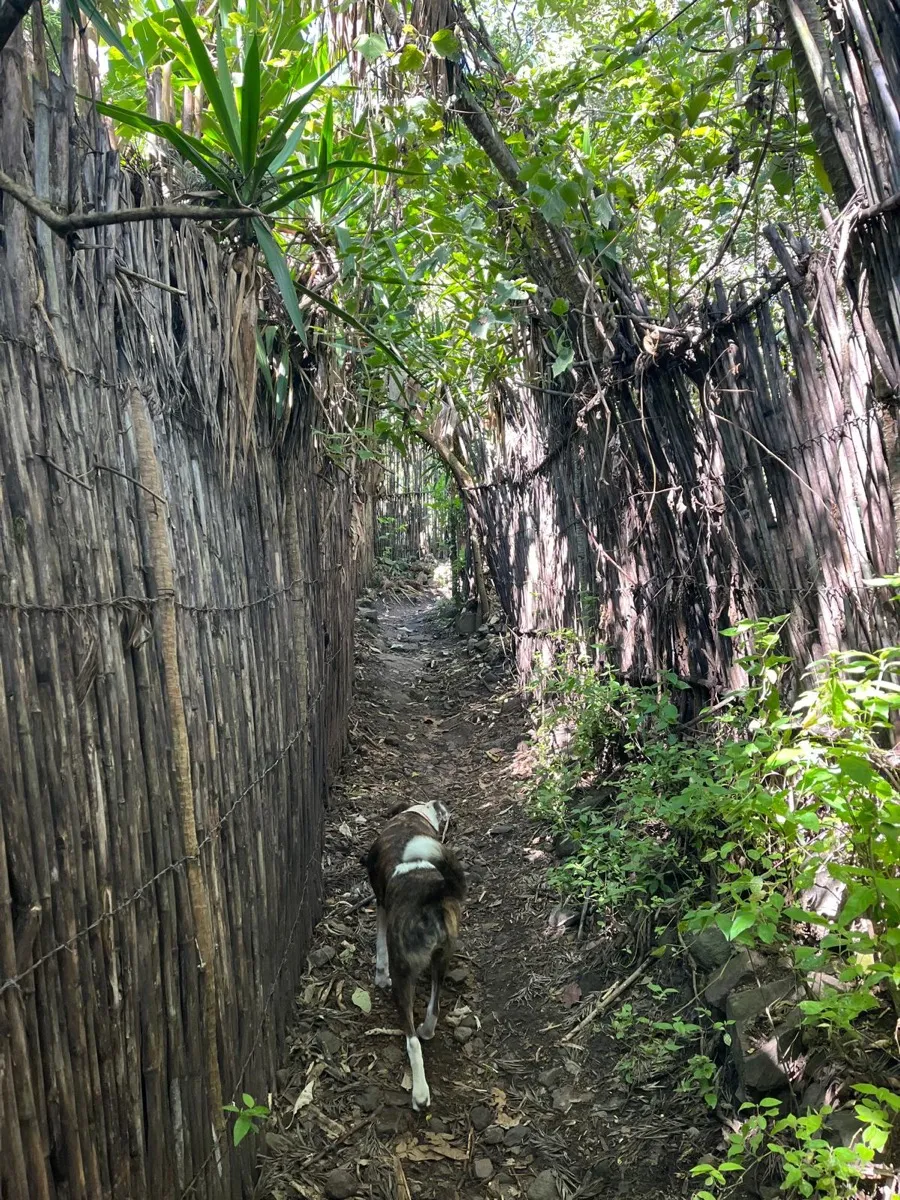
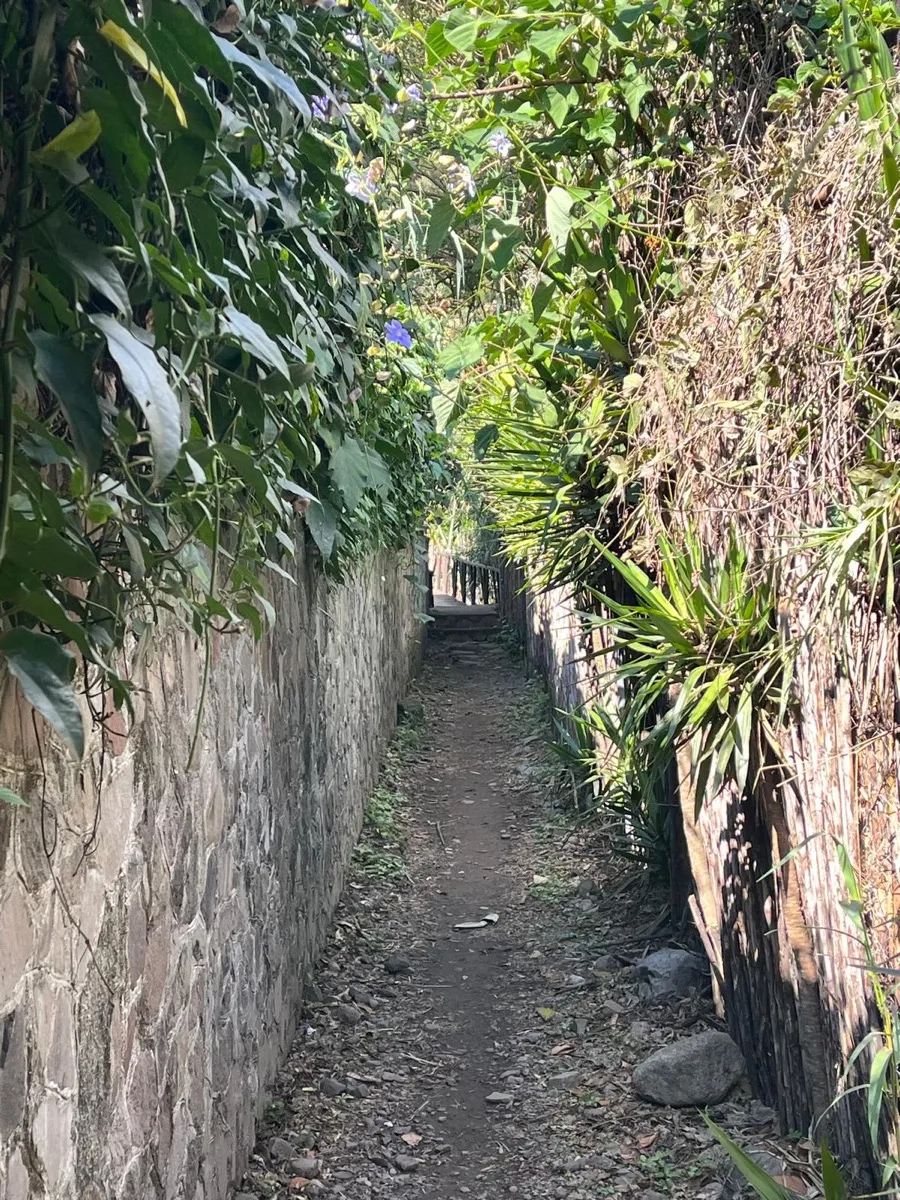
Northwest of the Gaia Dance Temple, a cluster of foreign-owned residential and retreat properties has been developed and fenced over the past decade in a way that has enclosed what were once open footpath corridors. Long-time residents and locals refer to this area informally as "the little America" — a name that carries a mixture of affection and mild critique. The fencing has created a walled, somewhat insular zone that feels different from the open hillside character of the rest of the village. The properties themselves are well-developed and appeal to some buyers seeking a more private, residential environment, but potential buyers in that corridor should experience the footpath dynamic firsthand before committing.
The Trash Burn
The village dump on the east road corridor periodically burns — a consequence of the absence of a formal sanitary waste facility. The resulting smoke affects neighbors in that part of the village. This is a quality-of-life reality that awaits municipal infrastructure investment. It is solvable at the individual property level through composting systems, biodigesters, and grey water treatment; at the village level, it remains unresolved.
What Tzununá Does Better Than Anywhere Else on the Lake
After all the honest accounting of what does not work, it is worth stating directly what Tzununá does better than any other village at the lake.
It has a real agricultural tradition — not a boutique farm aesthetic, but genuine productive farming that has run continuously for decades, that involves the Kaqchikel Maya community as practitioners and owners, and that has produced institutions like Atitlan Organics and Granja Tzikin recognized internationally.
It has stronger traditional social cohesion than San Marcos. The elder presence in the community is more intact. The Maya cultural identity is more visible and more active. That balance is fragile and not guaranteed — the tensions described above are real — but it still exists here in a way that buyers who came to the lake looking for genuine cultural immersion find more present in Tzununá than anywhere else.
It has physical beauty that is unmatched on the north shore, driven by the rivers, the twenty-plus waterfalls, the volcanic geology, and the views across the lake from the plateau. The first foreigner to visit meditated for an hour on a small volcancita above a cascade on his first visit and said "I want to live right HERE." Three decades later, the people who know this valley best still talk about it the same way.
Frequently Asked Questions: Life in Tzununá
Is Tzununá a good place for full-time living?
For the right person, it is one of the best. The combination of natural beauty, genuine community, and agricultural richness is hard to find anywhere at the lake. The honest caveats: no sanitary waste facility, periodic trash burn, water pressure variability, limited dining options, and the Sunday farmers market as the primary fresh food source all require a degree of self-sufficiency and planning that not every lifestyle buyer is prepared for. Visit for a full month — including a rainy season month — before you commit.
Is the Gaia Dance Temple a dealbreaker?
It depends on where your property is and how you feel about weekend noise. Properties close to the venue have a different acoustic reality on event nights. If you are considering a property in that corridor, do a site visit on a Sunday morning and a Friday or Saturday night before making any decisions.
What is the food situation for full-time residents?
Five foreign-friendly restaurants, one Sunday farmers market, and the need to plan your week around it. Residents who cook well and stock their kitchens on Sundays find it entirely workable. Boat access to Panajachel (30–40 minutes) and tuk-tuk access by road to San Marcos (15 minutes) extends the practical range for shopping and dining when needed.
How significant is the flood risk for residents?
Significant enough to take seriously in siting decisions. The flood history — Stan in 2005 and Agatha in 2010 — is well documented. The risk is concentrated in low-lying areas near the river; the plateau and elevated areas carry materially lower risk. Understand the hydrology of any specific property before you buy.
What makes Tzununá different from San Marcos for long-term living?
Quieter, more traditionally grounded, more agricultural, with stronger Kaqchikel Maya community presence and less of the social friction that comes with San Marcos's high tourist volume. The tradeoff is fewer amenities, longer access to major services, and less developed infrastructure. For buyers who came to the lake for cultural immersion, natural beauty, and a community that feels genuinely rooted rather than transient, Tzununá is the more honest answer.
The Honest Summary
Tzununá will not appeal to everyone. It asks something of its residents — self-sufficiency, patience with infrastructure, a willingness to engage with both the beauty and the friction of a community in transition. Buyers who arrive expecting the amenities of a more developed village will be disappointed. For buyers looking for a deeper connection to nature, beautiful hikes, a frontier mentality, and sustainable agriculture, this can be a dream come true. Buyers who arrive knowing what they are getting into will find something that becomes difficult to leave.
For buyers specifically drawn to the homestead cooperative community model, WuWei Village represents the most organized and land-secured version of that vision anywhere at the lake, and presents a rare opportunity to enter as a founding-era investor in a community that is being built with genuine intention and collective stewardship. It deserves a conversation of its own, and Atitlán Properties is positioned to facilitate that introduction.
At Atitlán Properties, we know this village at a level that no listing site can replicate. Antonio Semaj, our partner and a native of Tzununá, is fluent in Kaqchikel and rooted in the community's relationships. He is the reason we can offer genuine intelligence here rather than a rephrasing of public information. If you are seriously considering Tzununá, apply for the VIP Buyer Program or reach out directly to discuss what is actually available and what daily life actually looks like. That conversation is worth having before you make any decisions.
Before committing to any property at the lake, review our guides to OCRET lease due diligence, the title checks every buyer must run, and buying property in Guatemala as a foreigner.
Sources & References
Terry LaMarre, "How Silent Was My Valley" (Adventures of a High Plains Drifter), Chapter 1 — firsthand community history, the Hurricane Stan account, and the valley's agricultural development.
Stefan Bird, Atitlán Properties — lived experience in the Tzununá / Pasajcap corridor, market knowledge, and advisory role with WuWei Village.
Antonio Semaj, Atitlán Properties — native of Tzununá, community relationships, and cultural knowledge.
This post reflects observations and community knowledge as of early 2026. Community dynamics, businesses, and infrastructure change — verify current conditions on the ground before making any property or investment decisions.