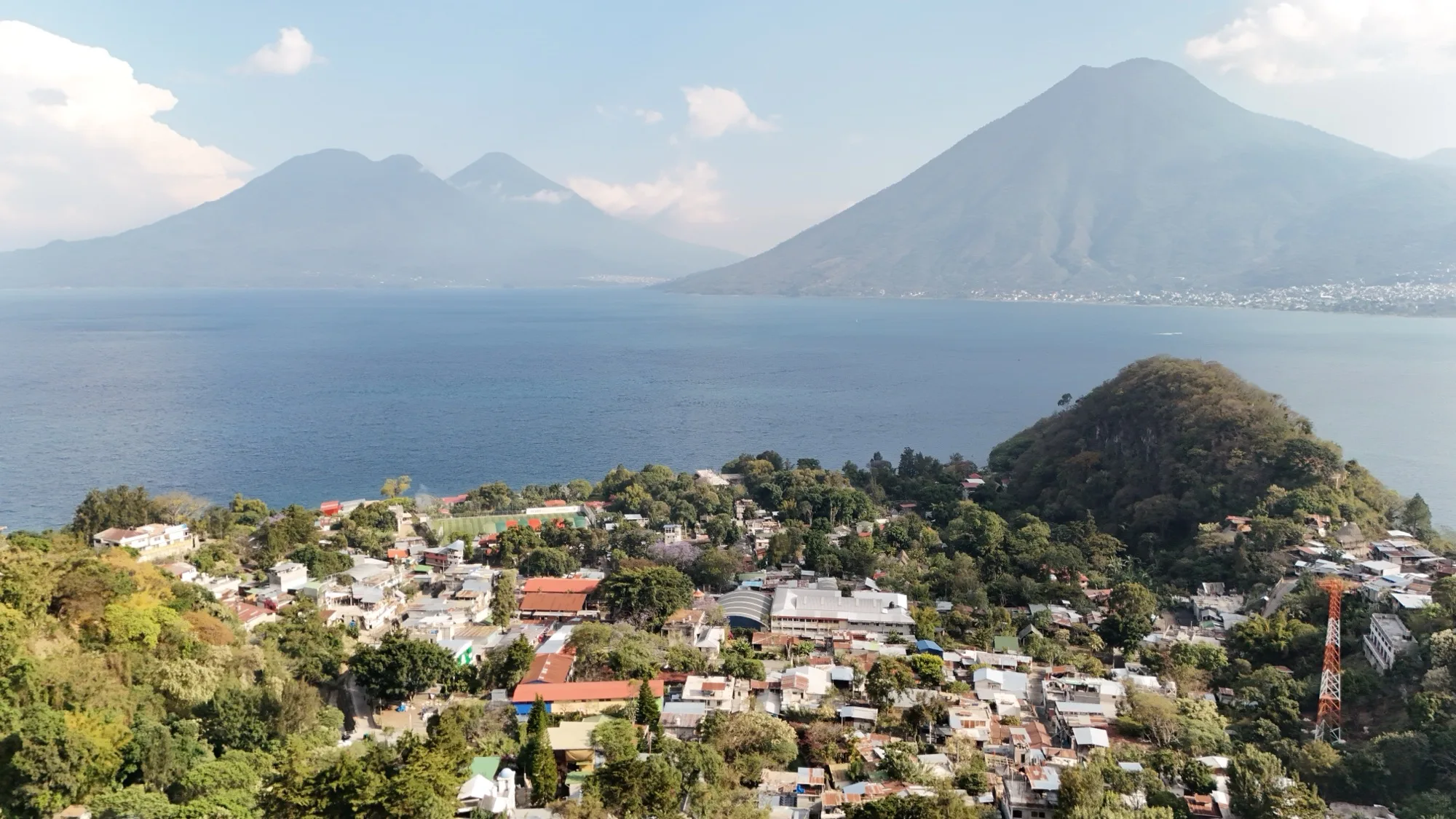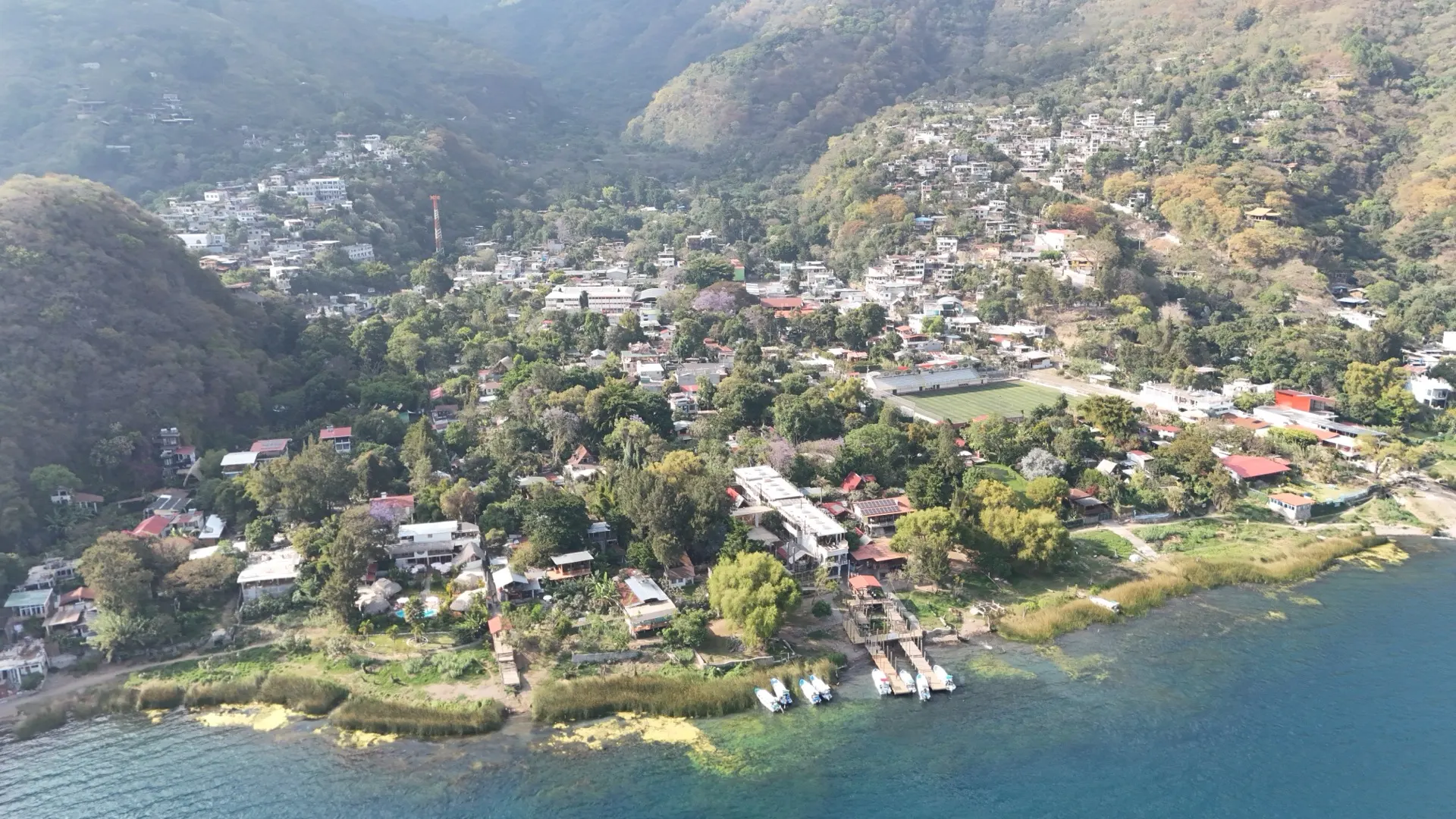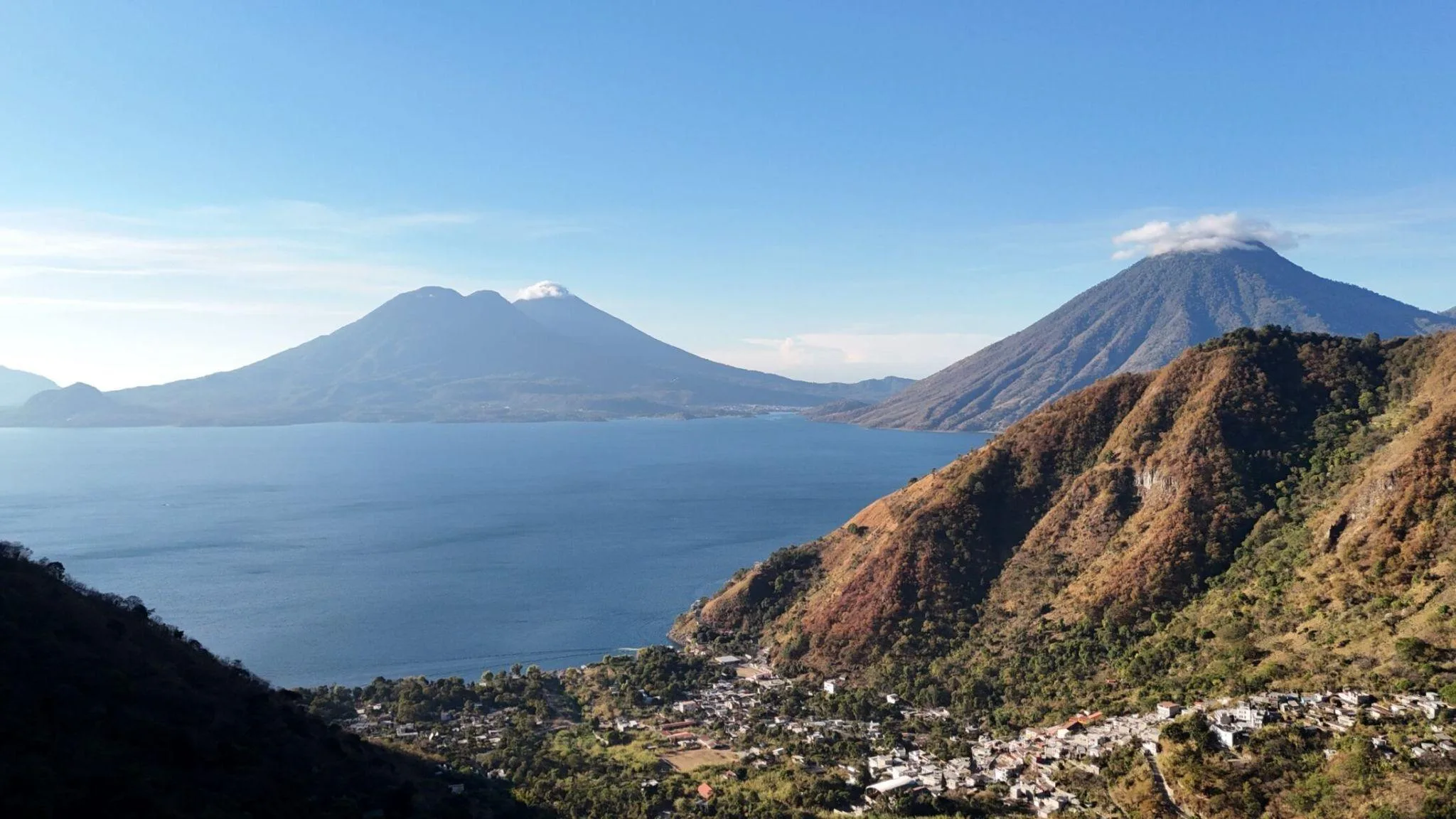
A market analysis for buyers who want the best of Lake Atitlán before the next appreciation cycle. Where Tzununá sits in the lake's cycle, what is driving prices, what each property type costs, and the flood and infrastructure realities every buyer must price in.
In 1996, Terry LaMarre paid Q3,000, roughly $400 at the exchange rate of the day, for 1.5 cuerdas of land in an unnamed valley on the north shore of Lake Atitlán. No roads. No electricity. Children diving into the bushes at the sight of a foreigner. He could have bought the entire valley, he writes, for that same price per cuerda. He didn't. Land speculation was not his purpose.
It was, however, the purpose of many who followed. That first cuerda is now part of Atitlan Organics, one of the best-known permaculture operations on Lake Atitlán. The valley is now home to retreat centers, eco-estates, yoga platforms, and a community of international buyers that grows every high season. And the land that sold for Q3,000 per cuerda in 1996 now trades at prices that would be unrecognizable to LaMarre's Mayan neighbors from that year.
This is the story of Tzununá, and it is a story that is still in motion. The village is rising fast. The window for early-cycle pricing is narrowing. And buyers who understand what is happening here, and why, are positioning themselves ahead of the next appreciation event.
Where Tzununá Sits in the Lake's Appreciation Cycle
Every village on Lake Atitlán has its own appreciation narrative. San Pedro had its moment in the backpacker era. Panajachel stabilized into a commercial center. San Marcos rode the wellness wave through multiple cycles and now sits at a mature, premium price point. Tzununá is where San Marcos was approximately fifteen years ago — internationally known enough to attract a sophisticated buyer cohort, not yet so discovered that early-cycle pricing has disappeared entirely.
The village has been through meaningful appreciation already. The wave of permaculture and sustainable-living interest in the 2000s brought the first foreign buyers. The broader retreat economy of the late 2010s brought the next wave. Each cycle lifted prices and added infrastructure. What we see now — improved road connectivity, growing international visibility, and a maturing community of anchor properties — has all the hallmarks of a third significant cycle building.
What Is Actually Driving Appreciation in Tzununá
Road Infrastructure
Historically, Tzununá was accessible primarily by boat — the north-shore road was poor and the connection to Sololá and the Interamerican Highway was difficult. That is changing. Road improvements have made the village increasingly accessible by vehicle, with onward connections that meaningfully reduce the journey to Antigua and Guatemala City. Every incremental improvement in road access has historically correlated with a step-up in land values on the north shore. That dynamic has not changed.
Spillover From San Marcos
The wellness and retreat economy that built San Marcos La Laguna is physically constrained there. Developable land in San Marcos is largely gone, prices reflect a mature market, and the social frictions described in our honest San Marcos market update are causing some buyers to look east. Tzununá is the natural beneficiary of that overflow. It offers comparable physical beauty, similar boat access, proximity to San Marcos's amenities, and a community character that many buyers find more aligned with what they originally came to the lake looking for.
Established Anchor Properties
A village's investment thesis strengthens when anchor properties — operations with genuine track records — demonstrate what is possible. In Tzununá, Atitlan Organics (now available for acquisition after operating for nearly two decades) and properties like the Bambu Guest House, Casa Curativa, and Granja Tzikin all signal that the market is real and operating. These are not speculative values; they are demonstrated by occupancy, revenue, and the repeat international visitors who return specifically for Tzununá.
Property Types and What They Cost
Lakefront
True lakefront in Tzununá — with direct water access, private-dock potential, and an OCRET lease — is scarce and increasingly sought. Current pricing runs from approximately $200,000 to $700,000 USD or more, with the upper end reflecting established hospitality operations with infrastructure and demonstrated income. The spread is wide because the village still has enough market inefficiency that exceptional value exists alongside premium asking prices. A buyer with good local intelligence can find it; a buyer relying on public listings alone will not.
Hillside and Plateau Properties
The plateau above Tzununá — the area LaMarre described as "flat, almost stone-free land, with a magnificent vista" — is where much of the most interesting development has happened. Eco-estates, retreat centers, and residential compounds with lake and volcano views sit above the flood plain in the safest and most scenic part of the valley. Hillside properties with strong views range from roughly $80,000 to $350,000 USD depending on size, improvements, and access.
Land
Raw developable land in Tzununá still exists — unlike San Marcos, where it has effectively disappeared near the center. Accessible parcels with views and road or path access are trading at roughly $30,000 to $50,000 per cuerda for quality sites. That price still represents an entry point that has largely disappeared in more mature lake villages. For buyers willing to build, the value equation in Tzununá remains among the most compelling on the north shore.
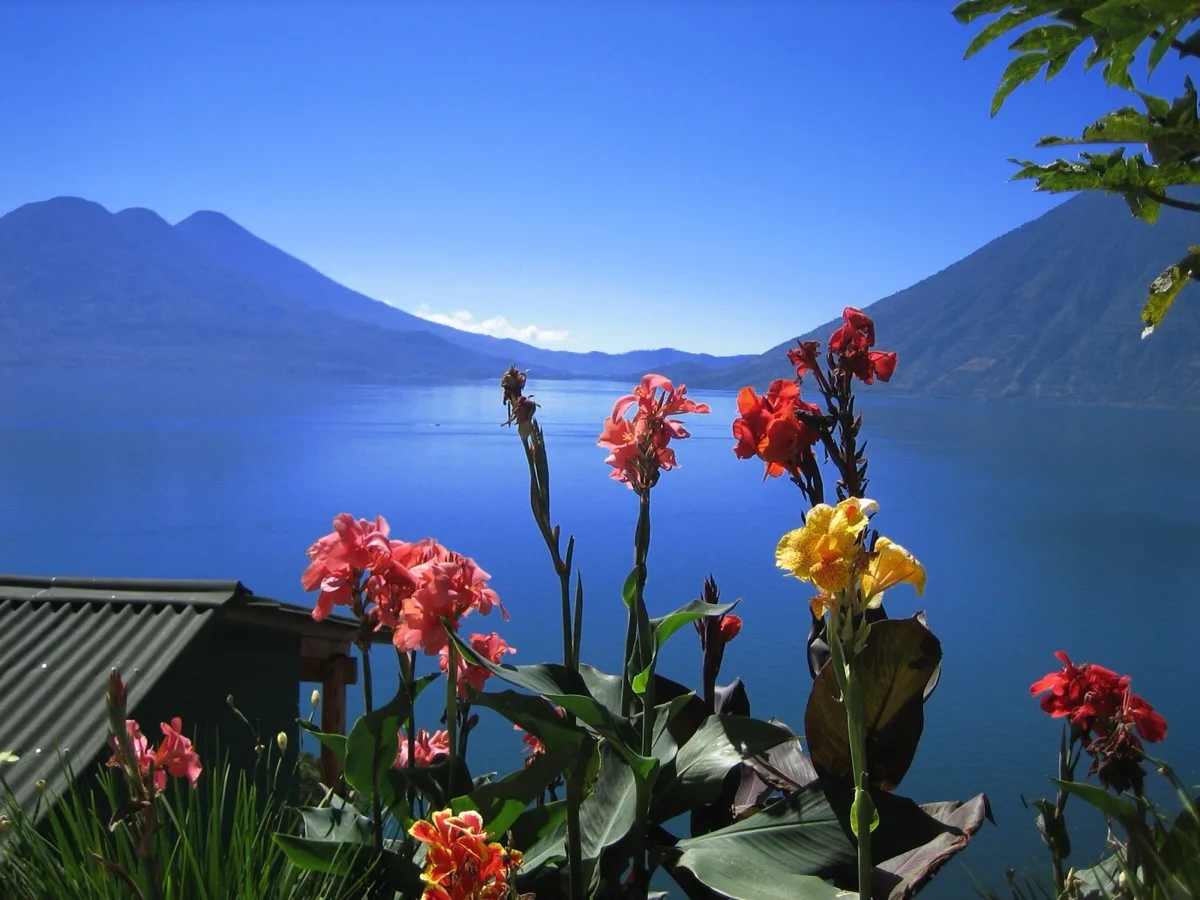
Atitlan Organics — A Notable Opportunity
The property that started it all — the original permaculture farm on Lake Atitlán, developed by the couple who bought the land in 2007, then acquired by an aspiring apprentice who also owns Bambu House and other significant Tzununá properties — has been casually listed off and on for approximately two years. Atitlan Organics represents one of the most storied and operationally established properties available anywhere on the lake. It is not a new development play; it is an acquisition of a proven operation with two decades of history, international brand recognition in the permaculture world, and land that the first gringo himself described as the finest in the valley. The listing has not sold because it has not been marketed to the right buyer. That buyer exists.
What Buyers Must Understand: Infrastructure and Risk
An honest market analysis of Tzununá includes the factors that create real risk and real inconvenience. These are not reasons to avoid the village; they are inputs that every buyer must price and plan around.
Flood Risk in the Valley
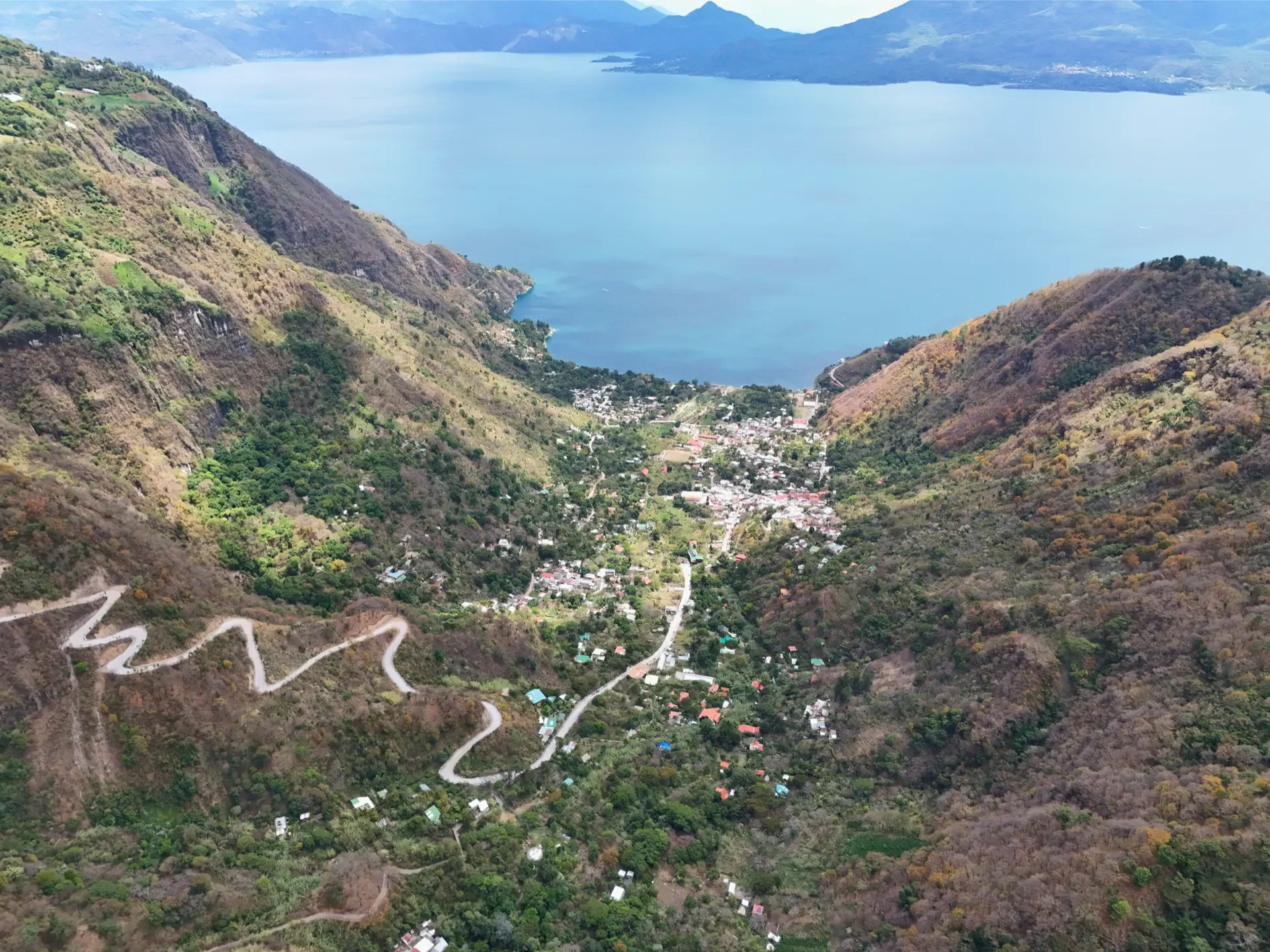
The Tzununá river is beautiful, and it has been a draw since the first foreigner followed it to its springs in 1996. It is also a serious hydrological force. Twice in roughly thirty-year cycles — Hurricane Stan in 2005 and Tropical Storm Agatha in 2010 — the river has dramatically reshaped the valley floor. LaMarre writes of boulders the size of cars rolling like ping-pong balls, the river cutting new channels overnight, entire neighborhoods evacuated. Most new construction in the valley has occurred in the last decade. Most of those owners have no direct experience of what the river can do.
This is not a disqualifying risk; it is simply a siting and construction risk. Properties on the plateau above the flood plain carry materially lower flood exposure than properties on the valley floor or close to the river channel. LaMarre himself moved uphill after Stan. Buyers evaluating properties near the river or in low-lying areas should understand this history and factor it into both their offer and their construction plans. A geotechnical assessment of any flood-plain-adjacent site is money well spent.
Waste Infrastructure
Tzununá does not yet have a sanitary waste facility. The village dump, located on the east-road corridor, periodically burns, and the smoke can affect neighbors in that area. This is a known and ongoing quality-of-life issue that has not yet been resolved by municipal infrastructure investment. It is also a solvable problem at the property level through closed composting systems, biodigesters, and grey-water treatment — already operating on many of the village's eco-properties — but buyers should understand it exists and is not resolved at the community level.
The "Little America" Enclave
Northwest of the Gaia Dance Temple, a cluster of foreign-owned properties has come to be referred to by locals and long-timers as "little America." This is a gentrified neighborhood that has been developed and fenced over the past decade, converting former footpath corridors into a walled residential zone. The fencing has created what some describe as a tunnel effect on the public footpaths, narrowing the open feel of other areas in the village. The properties themselves are well-developed residential and retreat uses that appeal to some international buyers. The enclave dynamic is real and worth understanding before you decide where in the village to buy.
The Investment Thesis for Tzununá
Tzununá offers something genuinely rare at Lake Atitlán in 2026: a village with a proven track record of appreciation, a clear and active catalyst for the next cycle, and pricing that still reflects its relative obscurity rather than its actual quality. The combination of road infrastructure investment, San Marcos overflow demand, established anchor operations, and a growing international community creates the conditions for a meaningful price step-up in the next three to five years.
The buyers who will capture that appreciation are the ones moving now — before the listing sites are full of Tzununá properties, before the San Marcos premium has fully transferred east, and before the village's name becomes as automatic a reference point as San Marcos is today. That moment is coming. It is not here yet. The window is narrowing, not closed.
WuWei Village: Investing in a Community, Not a Plot
WuWei Village is a unique intentional community on the plateau above Tzununá offering an opportunity to invest in land, food systems, and community. WuWei Village Phase 2 Investment is currently open and seeking new shareholders. Unlike traditional real estate developments, investors acquire equity in the holding company that owns and stewards the land and village infrastructure rather than individual plots of land. Ownership means becoming part of the village story. It is a strong fit for ethical investors seeking to be part of true sustainable development, or for those who want to be part-time or long-term homesteaders but do not have the knowledge or capacity to steward their land year-round.
WuWei Village has assembled three hectares of land and built three naturally designed homes with no debt. In Phase 2, the village will expand to include four short-term rental cabins overlooking an annual river, a restaurant, a shala, retreat accommodations, river and playground amenities, a makers' space, a community kitchen, and an additional five homes. The village is grounded in four pillars: Earth Care, Spirituality, Creative Expression, and Community. If this is something you might be interested in, reach out to Atitlán Properties and we will be happy to make the introduction.
Frequently Asked Questions: Tzununá Real Estate
How does Tzununá pricing compare to San Marcos La Laguna?
Lakefront in Tzununá currently runs roughly $200,000 to $700,000 USD — a meaningful discount to comparable San Marcos lakefront at $250,000 to over $1,000,000. Hillside properties follow a similar pattern. The gap reflects Tzununá's earlier market stage and lower international name recognition, not a difference in physical quality. For buyers who understand the trajectory, that gap is an opportunity.
Is Tzununá accessible by road?
Yes, and increasingly so. Road improvements have connected the village to Sololá and the Interamerican Highway more reliably than at any point in the village's history. Boat access via the public dock and boat-taxi network remains the most common daily mode for many residents. The combination of improving road and existing boat access makes Tzununá more practically connected than its north-shore location might suggest.
What is the flood risk for properties near the Tzununá river?
Real and historically documented. The river flooded severely in 2005 (Hurricane Stan) and again in 2010 (Tropical Storm Agatha), reshaping the valley floor both times. The risk is concentrated in low-lying areas near the river channel and flood plain. Properties on the plateau above the valley carry materially lower risk. Any buyer evaluating a property near the river should understand the flood history and consider a site assessment before committing.
Is Atitlan Organics actually available to purchase?
It has been informally listed for approximately two years without a transaction. The property represents one of the most historically significant and operationally established holdings in the village — nearly two decades of permaculture farming, an international reputation in the sustainable-agriculture community, and land that the original pioneer of the valley considered the finest available. The right buyer, or the right introduction, has not yet been made. If this is the type of asset that interests you, reach out — this is exactly the kind of off-market intelligence the VIP Buyer Program is built around.
What is WuWei Village and is it open to outside investors?
WuWei Village is an intentional community on the plateau above Tzununá offering an opportunity to invest in land, food systems, and community. Phase 2 is currently open and seeking new shareholders. Unlike traditional real estate developments, investors acquire equity in the holding company that owns and stewards the land and village infrastructure rather than individual plots. It is a fit for ethical investors who want to be part of genuine sustainable development, or part-time and long-term homesteaders who lack the capacity to steward land annually. Reach out to Atitlán Properties and we will be happy to make the introduction.
The Bottom Line on Tzununá
Tzununá is not a secret anymore. But it is not yet priced as if it were the next San Marcos. That gap — between what the village is and what the market has not yet fully priced — is where the investment case lives. It will not stay open indefinitely.
At Atitlán Properties, Tzununá is a village we know from the inside. Our local partner Antonio Semaj is a native of the village, fluent in Kaqchikel, with community relationships that reach back generations. The off-market inventory we access here goes beyond what any listing site will show you. If Tzununá is on your radar, apply for the VIP Buyer Program or reach out directly to discuss what is currently available.
Before committing to any property at the lake, review our guides to OCRET lease due diligence, the title checks every buyer must run, and buying property in Guatemala as a foreigner.
Sources & References
Terry LaMarre, "How Silent Was My Valley" (Adventures of a High Plains Drifter), Chapter 1 — firsthand account of Tzununá from 1996, Hurricane Stan in 2005, and the valley's development trajectory.
Stefan Bird, Atitlán Properties — market knowledge, transaction experience, and on-the-ground practice at Lake Atitlán.
Antonio Semaj, Atitlán Properties — native of Tzununá, community relationships, and local market intelligence.
Property price ranges reflect market observations as of early 2026 and are provided for general orientation only. Individual values vary by condition, title structure, access, and specific location. This post does not constitute a formal appraisal or investment advice.