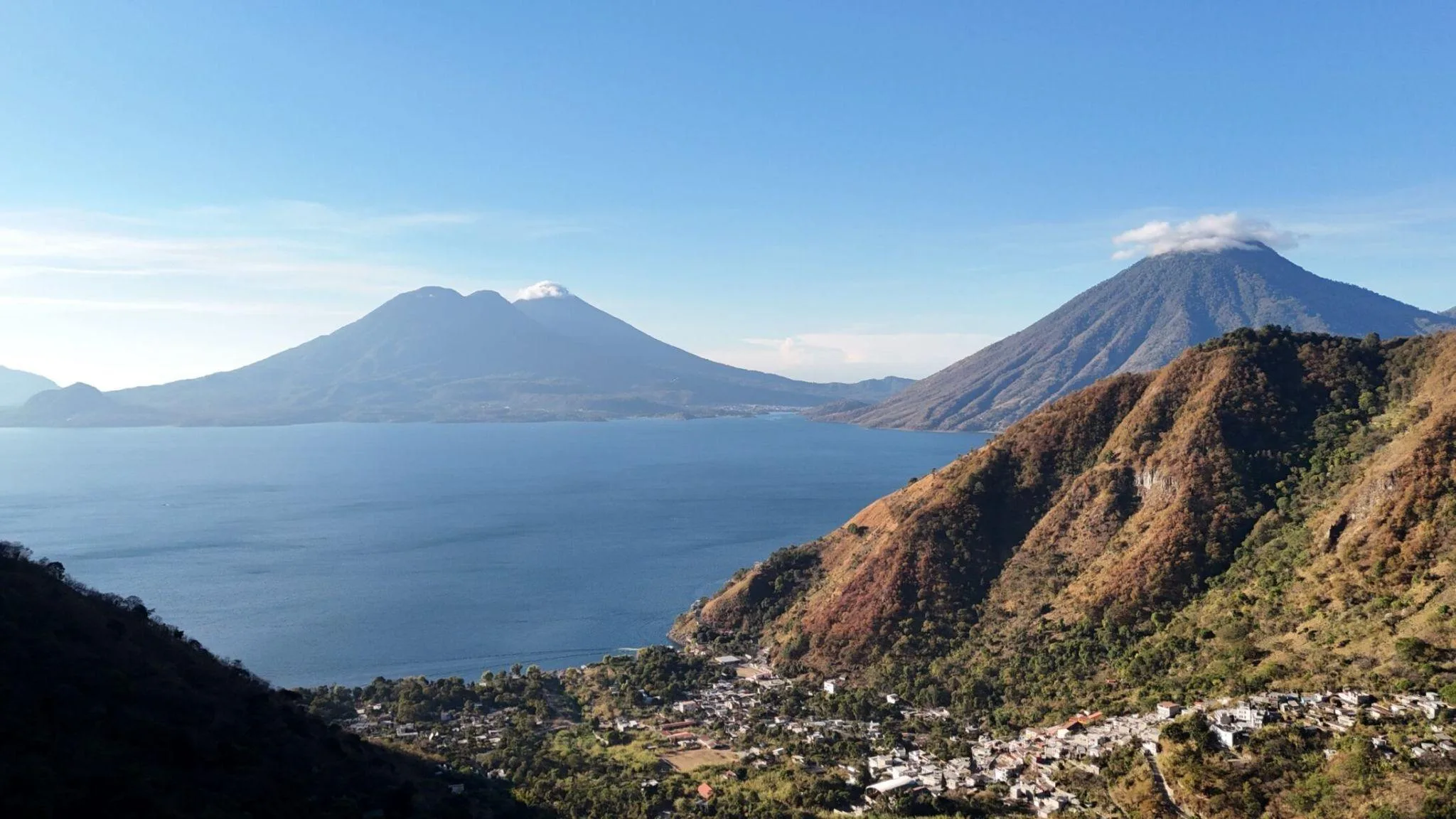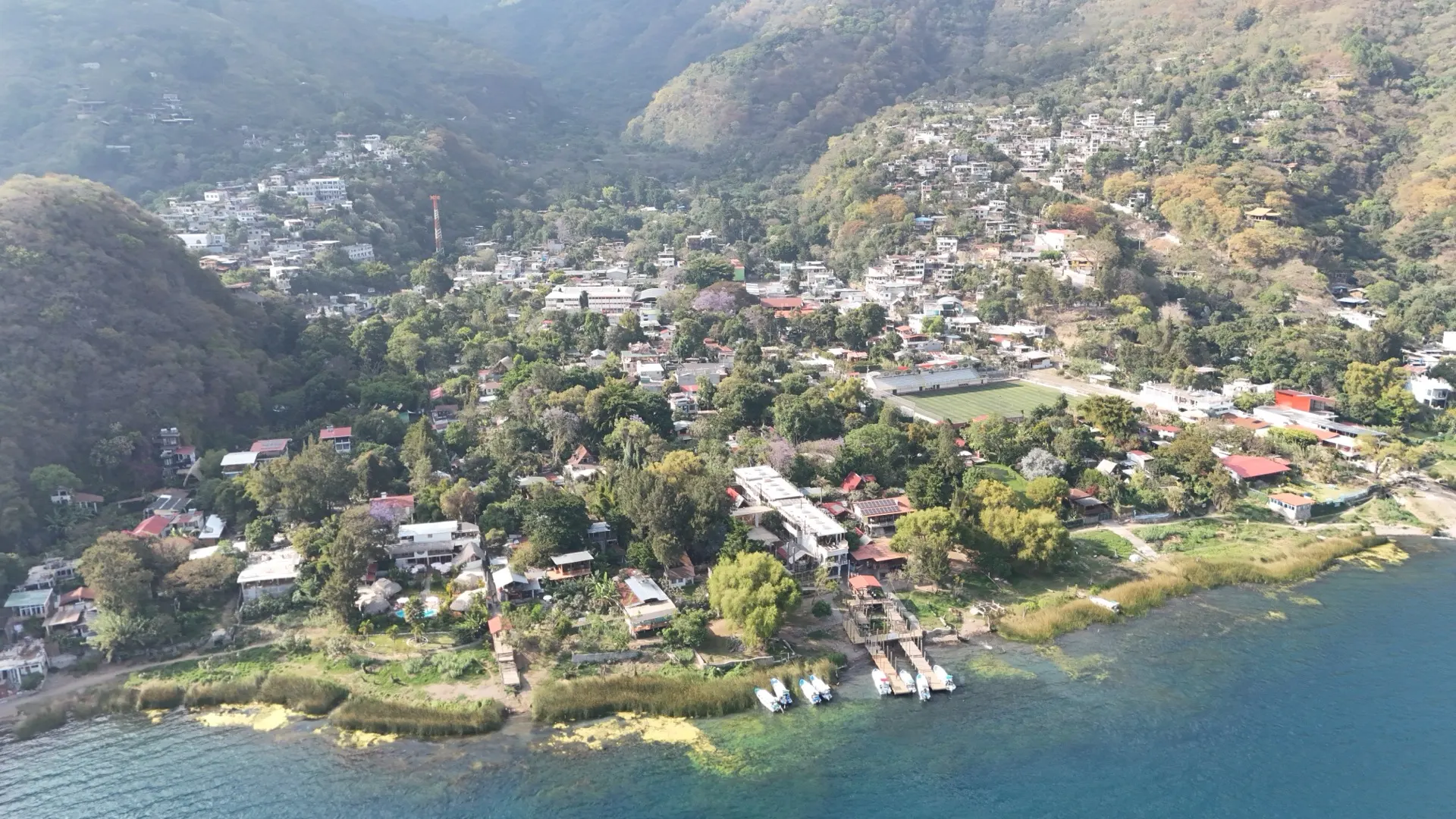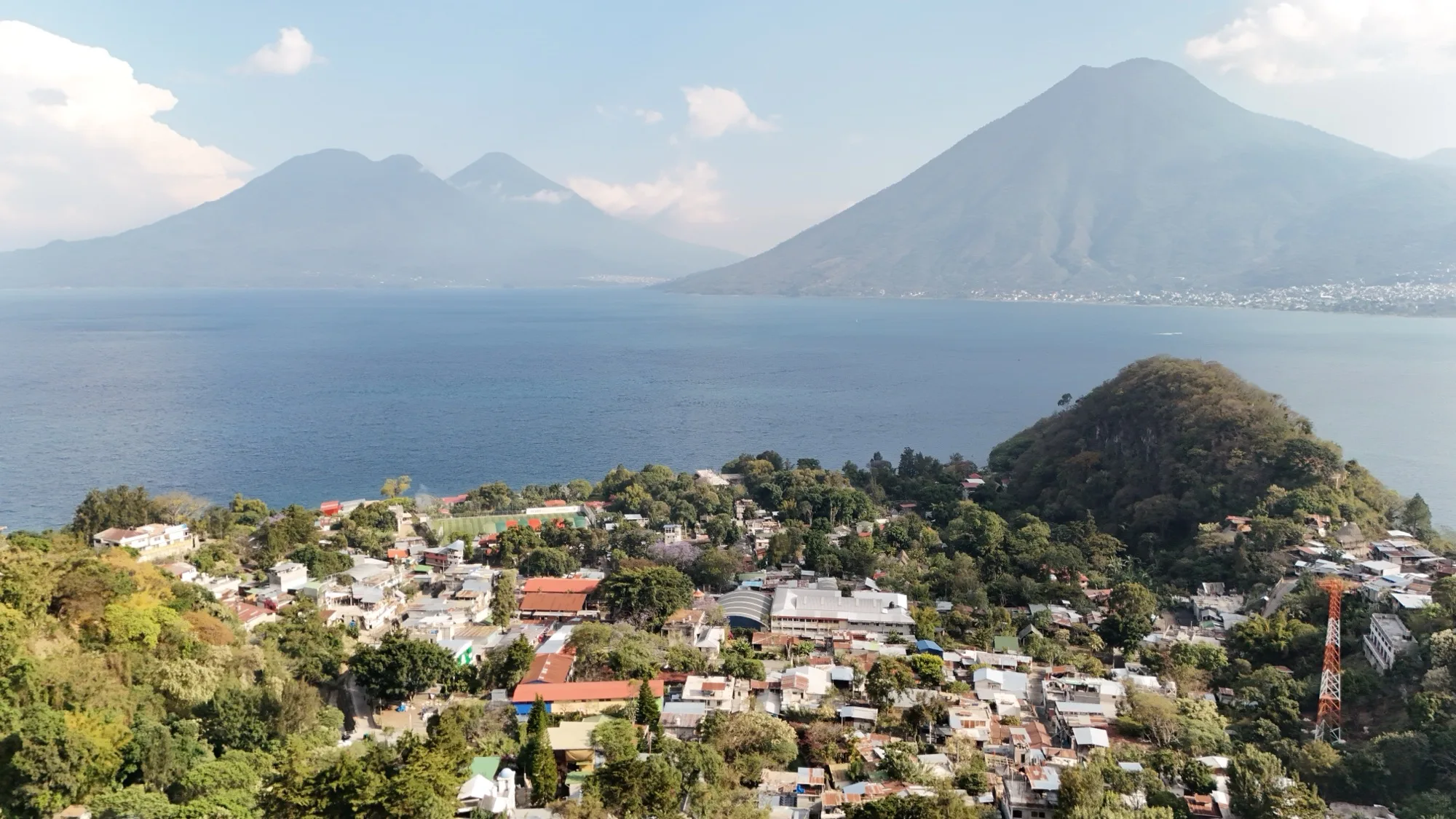
The most internationally recognized wellness village at Lake Atitlán, by the numbers. What San Marcos property actually costs in 2026, who is buying, what is driving the market, and the quality-of-life realities serious buyers need to weigh before they commit.
Of all the villages on Lake Atitlán, San Marcos La Laguna generates the most outsized reputation relative to its size. It is a small village — a few thousand residents on a narrow strip of lakefront — that has become one of the most internationally recognized wellness destinations in Central America. Yoga schools, meditation centers, cacao ceremonies, holistic retreat programs: San Marcos has built a brand that draws visitors and buyers from Europe, North America, and beyond who would not be looking at any other Guatemalan village.
San Marcos La Laguna property has appreciated meaningfully over the past three decades through four distinct cycles, and it commands pricing at the higher end of the lake. But the village is also at an inflection point. Infrastructure constraints, noise, and the social dynamics that come with rapid international attention are creating quality-of-life pressures that thoughtful buyers need to weigh alongside the investment thesis.
This post gives you the honest picture: what the market actually looks like, what is driving it, what the risks are, and whether San Marcos La Laguna real estate makes sense for your specific objectives.
What San Marcos La Laguna Actually Is
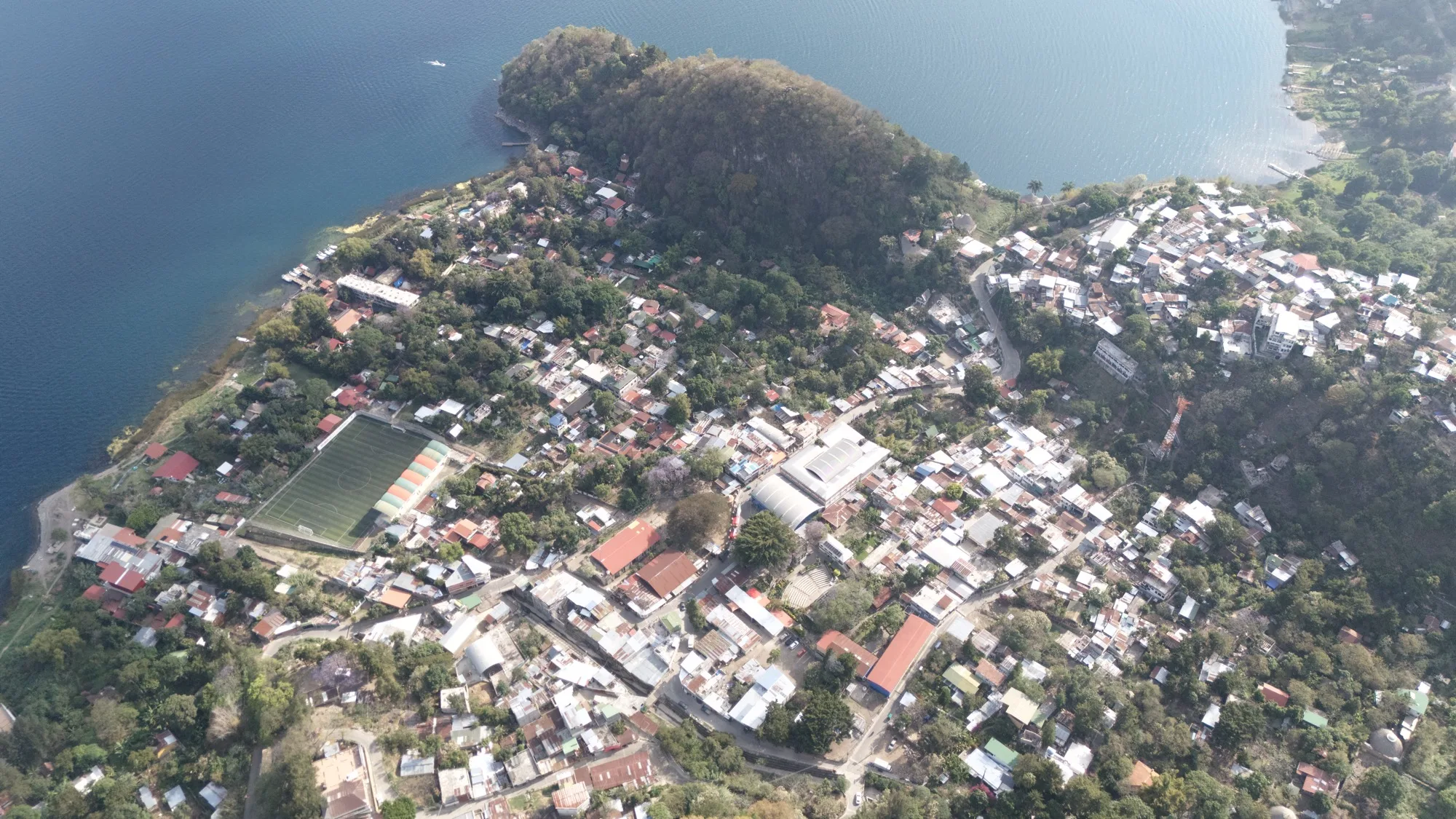
San Marcos is a Kaqchikel Maya village that has absorbed decades of international influence without, unlike some lake villages, losing its underlying character entirely. The original community still lives here. The Catholic church still anchors the plaza. Kaqchikel is still spoken on the street alongside Spanish and English.
Layered over that foundation is one of the most concentrated wellness ecosystems in Latin America. Las Pirámides del Ka established the village's international meditation reputation in the 1980s. The center's famous Moon Course — a month-long esoteric retreat combining meditation, yoga, and metaphysical study — has drawn serious practitioners from around the world for decades and continues to be the kind of transformational experience that brings people to San Marcos specifically. It is the kind of institution that turns visitors into buyers. It turned me into a full-time resident.
Yoga Forest followed, drawing practitioners and teachers from around the world. Today the village hosts multiple yoga schools, a range of holistic healing practitioners, permaculture projects, and an Airbnb density that reflects its status as a destination in its own right.
The result is a buyer and visitor profile unlike any other village at the lake: a mix of wellness entrepreneurs and retreat operators seeking commercial property, digital nomads and long-term residents drawn by the community, and a smaller cohort of residential buyers who simply want to live in one of the most beautiful and energetically distinct places on earth. The market reflects all three.
What Is Available and What It Costs
Lakefront Property
True lakefront property in San Marcos is scarce. The village has a relatively short stretch of waterfront, most of it already developed or held by long-term owners with no immediate intention to sell. When lakefront does come to market, residential prices range from approximately $250,000 to over $1,000,000 USD depending on frontage, improvements, and OCRET situation. The upper end reflects homes built in an era of inexpensive materials and labor that now command premium prices for their position alone. Established hospitality operations with operating income and infrastructure in place occasionally come to market at $1,500,000 and above.
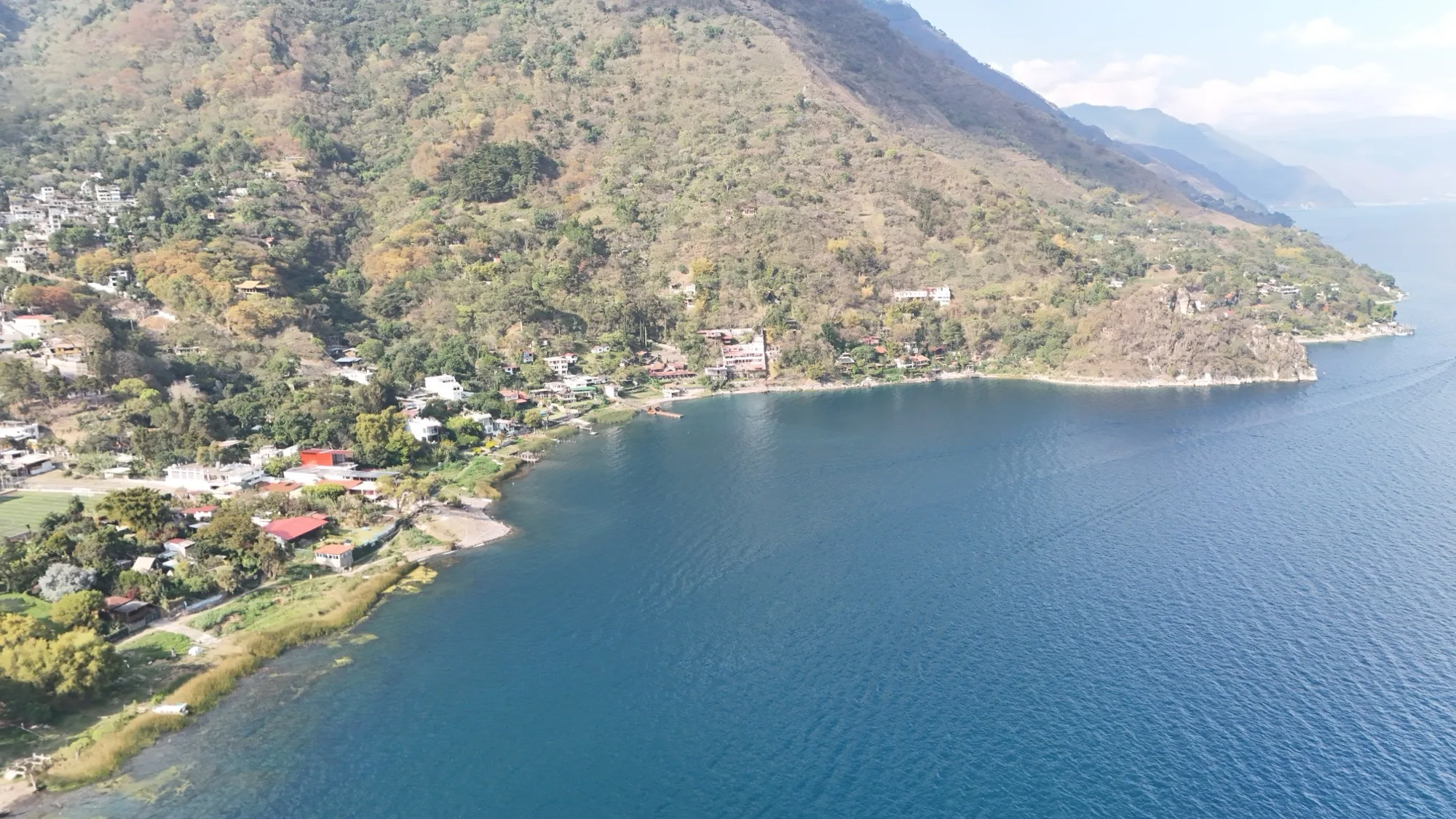
As with all lakefront property at Atitlán, buyers should confirm OCRET lease status, annual fee currency, and transfer approval as foundational due diligence before any serious negotiation. See our full breakdown of OCRET at Lake Atitlán for the complete framework.
Hillside Residential and Retreat Properties
The majority of transactions in San Marcos happen above the waterfront, on the hillside paths and terraces that give the village its characteristic vertical layout. These properties offer spectacular lake and volcano views, often with significant land for garden development, at pricing that reflects their non-lakefront position. Hillside residential properties with lake views typically range from $120,000 to $600,000 USD. The upper end reflects multi-structure properties, proximity to roads, established gardens, and buildable additional land.
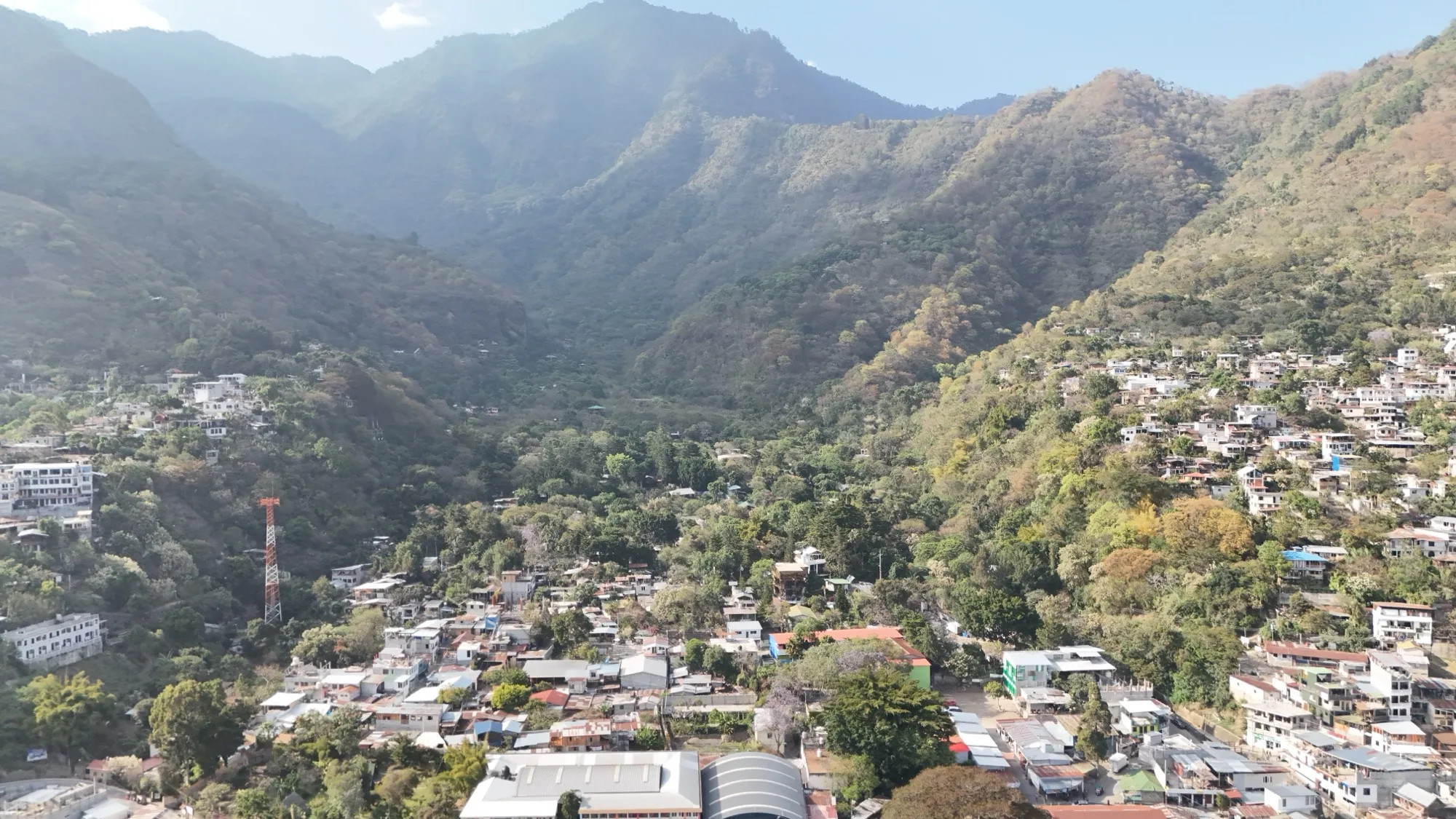
This is also the segment where retreat and wellness-oriented buyers concentrate. A hillside property with two or three structures, an outdoor yoga or meditation space, and strong views is exactly what the San Marcos wellness economy demands, and that specific demand profile keeps this segment active even when the broader market softens.
Land
Developable land in San Marcos is increasingly difficult to find close to the center. What does come available tends to be either steep terrain requiring significant terracing investment or parcels on the periphery of the village above the main road. Raw land in San Marcos starts at roughly $40,000 to $80,000 USD per cuerda (approximately 625 square meters) for accessible, view lots, with significant variation based on slope, services, and road access.
Market Dynamics: What Is Actually Driving This Market
San Marcos has been through approximately four distinct cycles of appreciation over the past thirty years. Each cycle has been driven by a wave of international attention: first the meditation community, then yoga tourism, then the broader wellness travel movement, then pandemic-era relocation interest. Each wave brought new buyers at higher prices, and long-term holders have seen strong returns.
Where does the market stand now? San Marcos is best characterized as a stabilized market with selective appreciation potential. It is not at the bottom of a cycle with obvious upside everywhere. It is a mature, internationally recognized destination where prices already reflect the village's reputation. The buyers who will do well here over the next decade are those acquiring the right asset — a property that serves the wellness economy, has clean title, and is positioned to benefit from the next wave of international interest — rather than anyone who assumes location alone guarantees appreciation.
One structural factor worth noting: San Marcos is physically small and tightly bounded by topography and the lake. The amount of developable land is genuinely limited. That supply constraint supports values over time, but it does not substitute for selecting the right specific property within that constrained market.
San Marcos rewards intentional ownership. The supply constraint is real — but location alone does not guarantee appreciation.
What the Market Data Does Not Tell You: Quality of Life
A serious market update for San Marcos has to address what the listing sites will not: the quality-of-life pressures that have been building alongside the village's international profile, and what they mean for buyers thinking about living here full-time or operating a business here long-term.
San Marcos faces infrastructure constraints that have not kept pace with demand. Water pressure is unreliable. A sewage treatment facility came online in 2025, but the absence of comprehensive piping infrastructure means its practical impact on the village remains limited. The electrical grid is stressed. The footpath network that gives the village its charm also means that vehicle access to many properties is limited or nonexistent — a logistical reality that is picturesque for a yoga retreat weekend and genuinely inconvenient for daily life.
One quality-of-life asset San Marcos has that most lake villages lack: Escuela Caracol, a Waldorf-inspired intercultural school founded in 2007 that serves around 130 children from both indigenous and international families. The school teaches in Spanish and Kaqchikel and offers the kind of holistic, arts-integrated education that appeals to the international community that has settled here. For buyers considering full-time relocation with children, the presence of an established school within footpath distance is a meaningful differentiator — one that most north shore villages cannot match.
The social dynamics have also shifted in ways worth naming directly. Unlike villages with stronger traditional elder authority structures where community norms are maintained and visitors are expected to adapt to local culture, San Marcos has become a destination where a segment of the international community operates with a degree of autonomy that creates friction. Noise, pet waste on public paths, and the general conduct of some visitors and short-term residents have become genuine concerns for both the Maya community and long-term foreign residents who came here specifically for the qualities that the current dynamic is eroding.
None of this makes San Marcos a bad investment or a bad place to live. It makes it a place that rewards careful buyer-property matching. A buyer seeking a retreat center with strong occupancy will find the demand is real and the market is there. A buyer seeking quiet, deep community integration, and a village with a strong traditional social fabric may find other villages — particularly San Pedro and San Juan La Laguna — better suited to what they are actually looking for.
San Marcos's international brand is an asset for the right property type and the right buyer. For the wrong buyer, it is background noise — sometimes literally.
Who Is Buying in San Marcos La Laguna
The active buyer pool in San Marcos breaks into three distinct profiles, each with different priorities and different property targets.
Wellness and Retreat Operators
The strongest and most consistent demand segment. Buyers seeking to operate yoga schools, retreat centers, healing practices, or hospitality businesses oriented to the wellness market find San Marcos's existing reputation and visitor flow impossible to replicate elsewhere at the lake. These buyers are typically willing to pay a premium for properties with the right physical layout — multiple structures, outdoor communal spaces, strong views, boat dock access — and are less price-sensitive than residential buyers if the operating economics work. This is the segment where San Marcos most clearly outperforms any other village on the lake.
Digital Nomads and Long-Term Residents
A significant and growing cohort of buyers who arrived initially as visitors, stayed for the community and quality of life, and are now committing capital. These buyers are typically purchasing hillside residential properties in the $120,000 to $300,000 range and are motivated more by lifestyle than investment return. They tend to have high tolerance for the infrastructure limitations and social complexity described above because they already know the village well before buying.
Pure Investment Buyers
The thinnest category and the highest-risk one. Buyers acquiring San Marcos property purely as a passive investment, without a clear operational plan or community connection, tend to find the management complexity and the village's specific quirks harder to navigate remotely. San Marcos rewards hands-on ownership. It is not a set-and-forget investment market.
What San Marcos-Specific Buyers Need to Know
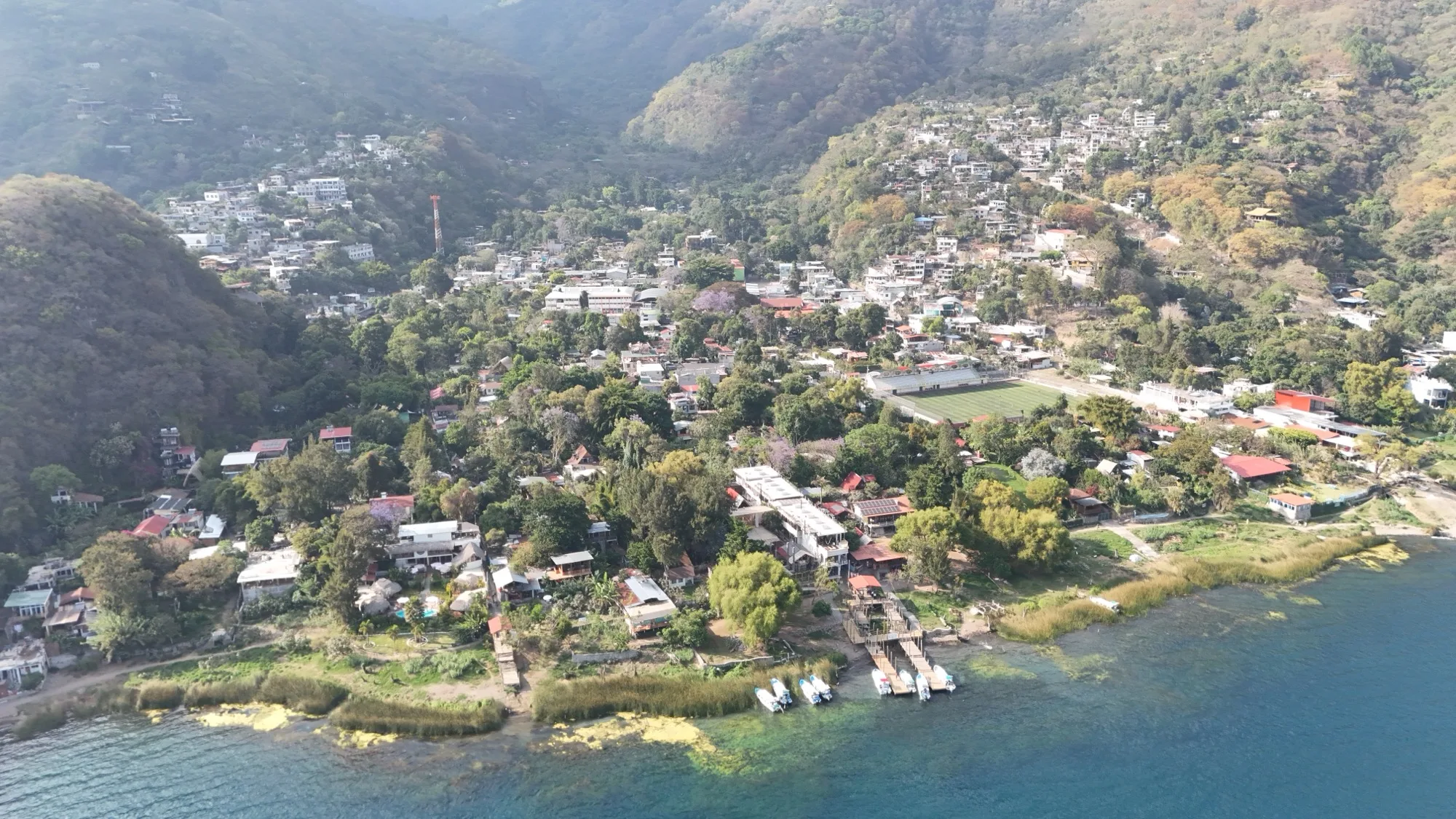
Boat access matters more here than in other lake villages. Many of the village's most desirable properties are not reachable by vehicle. Understand the access situation for any property you consider and what that means for construction, provisioning, and daily logistics.
The wellness market has specific physical requirements. If your intent is to operate a retreat or yoga business, verify that the property's layout, outdoor spaces, and acoustic environment actually support the use. A property with spectacular views but thin walls and close neighbors is not a retreat center regardless of what the listing says.
OCRET is the rule, not the exception. The vast majority of lakefront and near-lakefront property in San Marcos falls within the 200-meter reserve zone. Factor OCRET due diligence — lease status, fee currency, transfer approval — into your timeline and legal budget from the start.
Visit before the tourist season, and visit in the wet season. San Marcos in February during a yoga festival is a different village from San Marcos on a rainy Tuesday in September. Know which version you are buying into.
Price your quality-of-life requirements honestly. If noise, dogs, and limited infrastructure are deal breakers for you, there are other north-shore villages that may suit you better at comparable or lower prices. That is not a criticism of San Marcos. It is useful information that will save you from an expensive mismatch.
Frequently Asked Questions: San Marcos La Laguna Real Estate
Is San Marcos La Laguna a good place to buy investment property?
It depends entirely on what you mean by investment. For buyers with a clear operational plan — a retreat center, yoga school, or wellness hospitality business — San Marcos offers a proven market and an internationally recognized brand that no other lake village can match. For passive investors expecting appreciation without active management, the village's complexity and the current market dynamic make it a less compelling choice than it was during earlier appreciation cycles. San Marcos rewards intentional ownership, not passive ownership.
What types of property are most in demand in San Marcos?
Multi-structure hillside properties with outdoor communal space and lake or volcano views — the physical profile that supports retreat and wellness operations — are the most consistently demanded property type. True lakefront is always desirable but rarely available. Raw land close to the village center has effectively disappeared; what comes available is typically steep, peripheral, or both.
How does San Marcos pricing compare to other villages at the lake?
San Marcos sits at the higher end of the lake's pricing spectrum for its property type, reflecting its international brand and demand profile. Lakefront residential properties range from $250,000 to over $1,000,000 USD, with established hospitality operations trading at $1,500,000 and above. Comparable lakefront in less internationally known villages can be found for less. The premium reflects genuine demand, but it also means buyers paying full market value today have less obvious appreciation upside than those who bought in earlier cycles.
Is San Marcos La Laguna good for full-time living?
For the right person, absolutely. The village has a genuine international community, excellent access to lake transport, and a quality of life that draws long-term residents from around the world. The honest caveat is that infrastructure limitations — unreliable water, limited sewage coverage, electrical grid stress, limited vehicle access — and the social dynamics of a high-traffic international destination create frictions that some buyers underestimate. Rent in San Marcos for a full rainy season before you buy. The village reveals itself most clearly when the retreat crowd has gone home.
Are there better north-shore alternatives for buyers priced out of San Marcos?
Yes. Tzununá, the next village west along the north shore, offers many of the same physical qualities — dramatic lake and volcano views, boat access, a quieter community — at lower price points and with a stronger traditional social fabric. Santa Cruz La Laguna similarly offers excellent value with deep community roots and some of the best views on the lake. Both villages merit serious consideration for buyers who find San Marcos's profile interesting but its current dynamics or pricing a concern.
The Bottom Line on San Marcos La Laguna
San Marcos La Laguna has earned its reputation. The natural beauty is real. The wellness brand is real. The international demand is real. For the buyer whose objectives match what the village offers — a retreat center, a wellness business, a home in one of the most distinct communities in Central America — San Marcos remains one of the most compelling acquisition targets at Lake Atitlán.
The market is not at the bottom of a cycle, and no property purchased today is guaranteed to appreciate dramatically. It is a mature, internationally recognized market where the quality of the specific property and the clarity of the buyer's intent matter more than location alone. Buy the right property for the right reason, do your title and OCRET due diligence, and understand the village's quality-of-life reality before you commit.
At Atitlán Properties, we track what is available in San Marcos — on and off market — and we understand the village's specific buyer-property dynamics well enough to tell you honestly when a property is the right fit and when it is not. If you are evaluating San Marcos as part of your lake property search, apply for the VIP Buyer Program or reach out directly to discuss what is currently available.
Sources & References
Stefan Bird, Atitlán Properties — market knowledge and on-the-ground practice at Lake Atitlán
Atitlán Properties village market database and transaction history
Escuela Caracol (escuelacaracol.org) — Waldorf-inspired intercultural school, San Marcos La Laguna, founded 2007
Property price ranges in this post reflect market observations as of early 2026 and are provided for general orientation only. Individual property values vary significantly based on condition, title structure, access, and specific location. This post does not constitute a formal appraisal or investment advice.