A realistic underwriting framework for buyers considering a retreat center acquisition or ground-up development at Lake Atitlán, with real occupancy, cost, and cash-flow numbers instead of seller optimism.
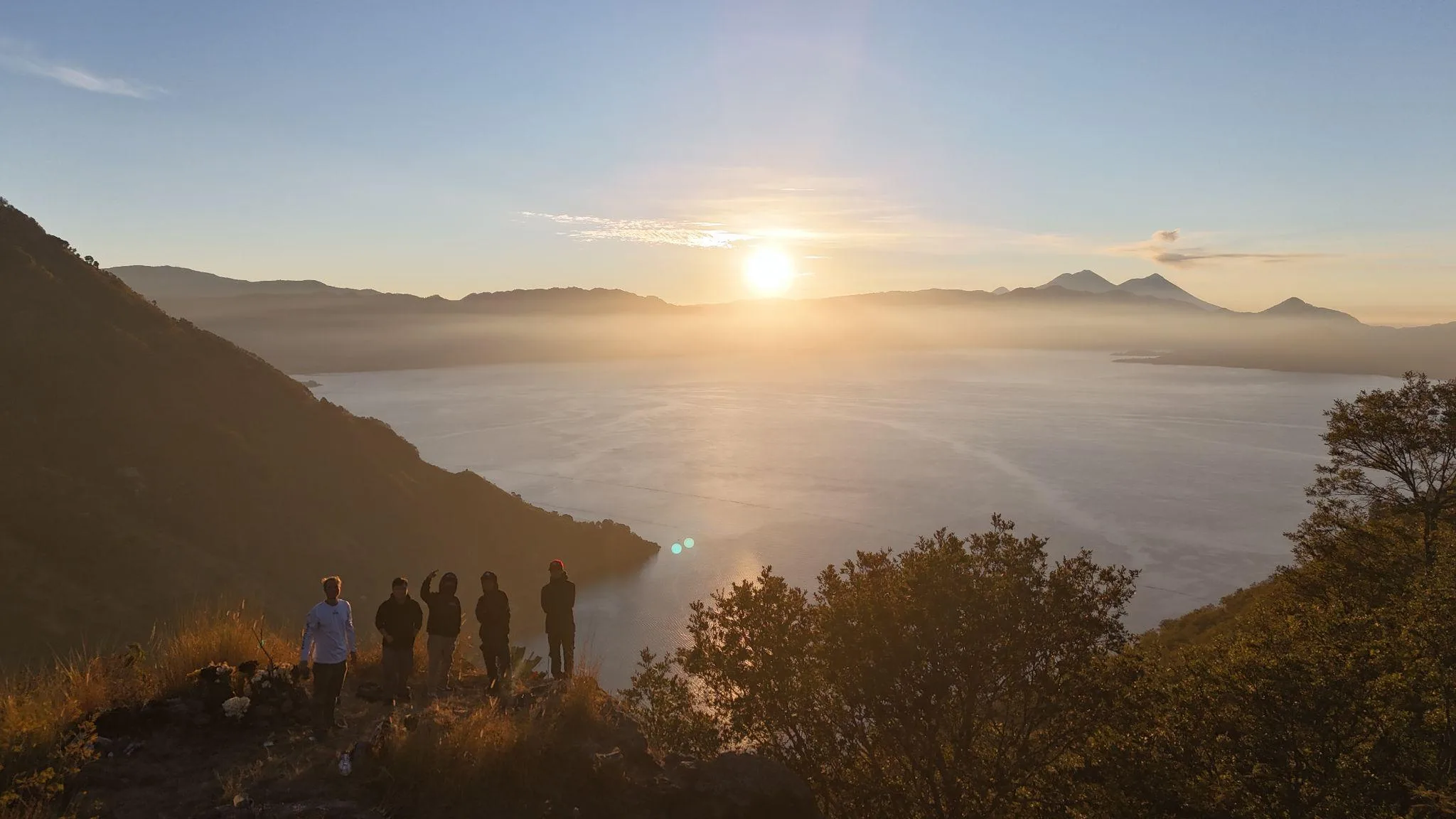
The dream is easy to picture: a yoga shala with volcano views, a cluster of cabins in the jungle canopy, guests flying in from New York and Berlin for a week of something they cannot get at home. Lake Atitlán is one of the most credible retreat destinations on earth, and for a certain kind of buyer the question was never whether to pursue it. The question is how to make the numbers work.
Most of what gets written about retreat center investment at the lake is either promotional material from a seller or aspirational content from an operator who wants you to share the dream. Very little of it tells the truth about the capital required, the operating realities, or the underwriting mistakes that cause sharp buyers to overpay or under-build. This is the framework to work through before committing to anything.
The asset is the easy part. The business around it is the hard part.
Why Lake Atitlán Is a Credible Retreat Market
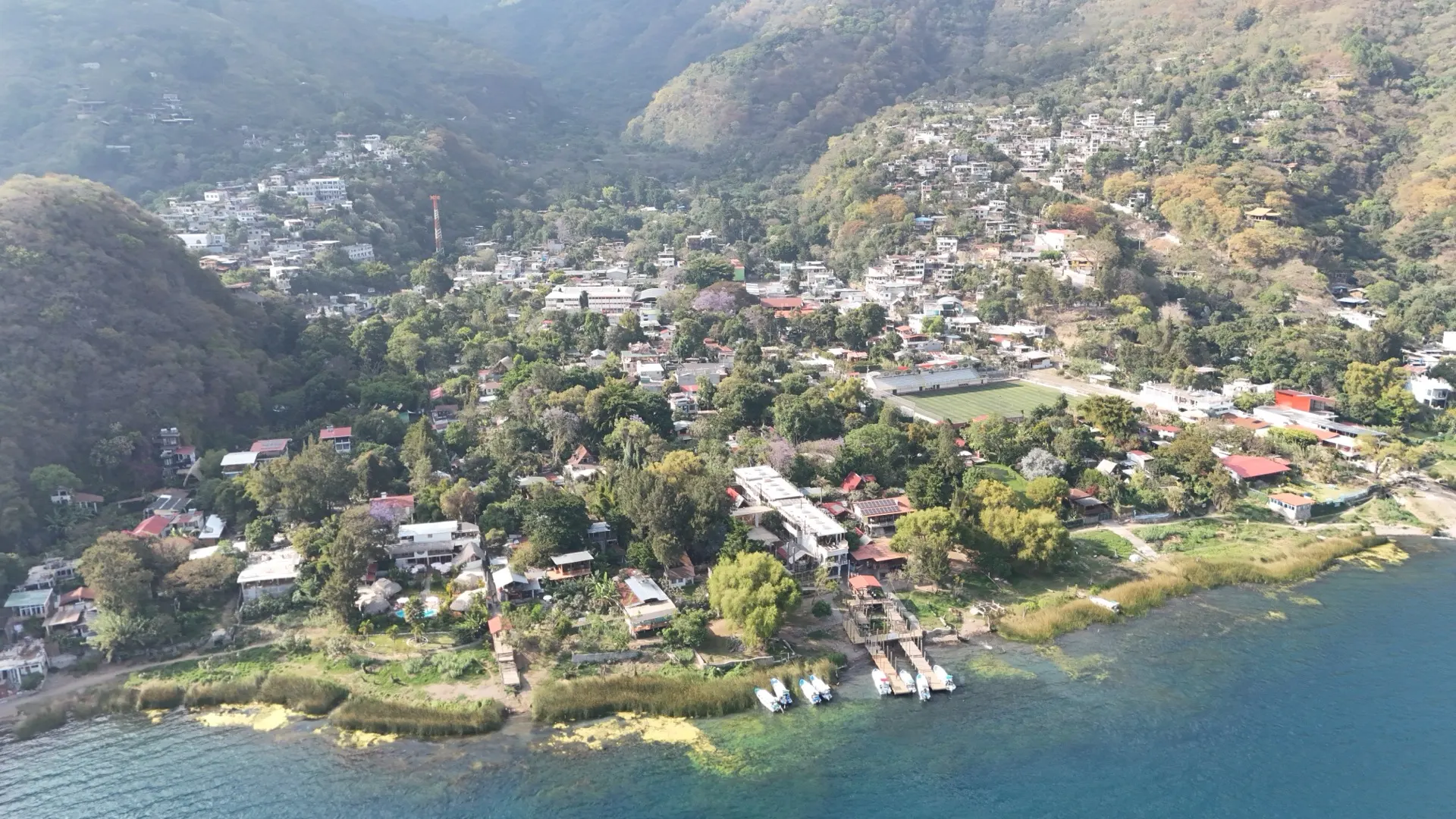
Not every beautiful place can support a real retreat business. Lake Atitlán can, and it has for decades, for reasons that are structural rather than trendy. The wellness and spiritual tourism economy here predates the current global retreat boom by thirty years. Las Pirámides del Ka in San Marcos La Laguna has been drawing serious practitioners since the 1980s, and over that time the lake built up the brand recognition, the operational infrastructure, and the international visitor base that newer destinations simply cannot replicate on a short timeline.
Retreat guests come to Lake Atitlán specifically for the lake. The destination itself is the draw, not just a pretty backdrop for someone else's program. That distinction matters when you model occupancy, because a property with genuinely good positioning benefits from baseline destination demand that carries it through shoulder seasons that would empty out a retreat center in a less established place.
It is also a competitive market. Established operations like Villa Sumaya, Isle Verde, Casa Floresta, and Kawoq Forest, along with a growing set of boutique properties in Tzununá, Santa Cruz, and San Marcos, have built loyal guest bases and full programming calendars. A new operation enters a real field, not an empty one.
Three Models, and What Each One Actually Costs
Retreat investment at the lake takes three distinct forms, each with a different capital profile, operating model, and risk structure. Blurring the lines between them is one of the most common errors in buyer conversations.
Model 1: Acquire an Operating Retreat Center
This is the most direct way in. You buy a property that already runs as a retreat center, with an established brand, repeat guests, and trained staff. Current asking prices run roughly $650,000 to $2,000,000 USD and up, depending on capacity, lakefront position, and whether the brand, guest list, and programming calendar transfer with the real estate. The risk is that retreat businesses are often deeply tied to their founders. A center built around one teacher or healer can lose a large share of its bookings the moment that person walks away. Verify, using actual booking records rather than seller projections, how much revenue is tied to the current operator's personal following versus the property and the destination themselves.
Model 2: Ground-Up Development
The most capital-intensive path, and for the right buyer the most rewarding. All-in development costs, covering land, construction, infrastructure, equipment, and pre-opening, realistically land between $1,500,000 and $2,500,000 USD and up. Land suitable for retreat development, meaning 1.5 to 2 acres with meaningful views, an adequate water source, and reasonable access, runs $400,000 to $800,000 in the established villages. Construction runs roughly $1,200 to $1,800 per square meter, with off-grid infrastructure adding $50,000 to $150,000, furnishing and equipping adding $30,000 to $80,000, and pre-opening marketing adding $15,000 to $40,000.
Permitting, construction, infrastructure, and the soft-launch period typically span 24 to 36 months from land acquisition to stabilized operations, and your capital has to carry you through that entire stretch with no retreat revenue coming in. That schedule is the cost of the single biggest advantage ground-up development offers: a property designed from the first sketch around the retreats you actually want to host, rather than someone else's compromises. Done well, it is also a legacy, and it is exactly the work our affiliated design-build practice, Atitlan Build, exists to support, modeling cost and timeline honestly from the start.
Model 3: Convert an Existing Residential Property
The middle path. You acquire a residential property with the physical bones for retreat use and convert it. Entry cost is lower than ground-up development, and you avoid the going-concern premium baked into an operating acquisition. The catch is that residential properties are rarely set up for retreat use: acoustic separation, shala dimensions, kitchen capacity, and bathroom ratios all matter and are expensive to retrofit. Budget a real conversion allowance, $200,000 to $500,000 depending on scope, before treating a residential building as retreat-ready.
What a Well-Run Operation Actually Earns
The most common mistake in retreat center underwriting is applying optimistic occupancy to a full-year revenue model. The lake has real seasonality, and any model that ignores it is not modeling the lake. It is modeling a wish.
Nightly room rates for a quality eco-retreat experience run $120 to $225 USD per room per night, meals included. The top of that range requires genuinely premium positioning: exceptional views, high-quality construction, a strong culinary program, and a name the international retreat market recognizes.
Two Scenarios, Side by Side
Here are two illustrative operations run through the same three scenarios and the same financing assumptions: purchase financed at 60 percent loan-to-value at 12 percent interest over 10 years.
14-bed retreat center · ~7 rooms · $700,000 purchase · $420,000 loan
| Scenario | Occ. | Rate/room | Gross | NOI (45%) | Debt svc. | Cash flow |
|---|---|---|---|---|---|---|
| Conservative | 60% | $120 | $158K | $71K | $72K | –$1K |
| Base case | 65% | $150 | $213K | $96K | $72K | $24K |
| Optimistic | 72% | $200 | $315K | $142K | $72K | $70K |
28-bed retreat center · ~14 rooms · $1,400,000 purchase · $840,000 loan
| Scenario | Occ. | Rate/room | Gross | NOI (45%) | Debt svc. | Cash flow |
|---|---|---|---|---|---|---|
| Conservative | 60% | $120 | $315K | $142K | $145K | –$3K |
| Base case | 65% | $150 | $427K | $192K | $145K | $47K |
| Optimistic | 72% | $200 | $630K | $284K | $145K | $139K |
Cash flow is pre-tax, before owner compensation and capital reserve.
Notice what the conservative column does in both sizes: a soft year barely covers debt service, before income tax, before the owner pays themselves, before setting aside anything for the roof that eventually needs replacing. The base case throws off real money. The optimistic case is genuinely strong. But the conservative case is the one you have to be able to survive, because at some point you will have a conservative year.
Staffing typically runs 20 to 35 percent of gross revenue, food and beverage 15 to 20 percent, and maintenance, utilities, marketing, and the annual OCRET fee another 5 to 10 percent. Net operating margins for a mature, well-run center land between 35 and 60 percent of gross revenue; the tables above use a 45 percent midpoint, deliberately not the rosy end. On the entry prices shown, implied cap rates are high by hospitality standards, which reflects buying near or below replacement cost. Pay retail for a stabilized going concern and the same NOI produces a far more ordinary return.
In this market the entry price does most of the work, and overpaying quietly erases the whole thesis.
The Same Property, Priced by the Bed
The tables above price revenue by the room. The hosted retreat model works differently: a group rents the whole property and pays per person, so every bed earns. That changes the math on the exact same building, though filling every bed is harder than filling every room, so the by-bed model is shown at deliberately lower occupancy, 40 to 50 percent, against 60 to 72 percent for rooms.
14-bed retreat center · booked by the bed
| Scenario | Occ. | Rate/person | Gross | NOI (45%) | Debt svc. | Cash flow |
|---|---|---|---|---|---|---|
| Conservative | 40% | $120 | $245K | $110K | $72K | $38K |
| Base case | 45% | $150 | $345K | $155K | $72K | $83K |
| Optimistic | 50% | $185 | $473K | $213K | $72K | $140K |
28-bed retreat center · booked by the bed
| Scenario | Occ. | Rate/person | Gross | NOI (45%) | Debt svc. | Cash flow |
|---|---|---|---|---|---|---|
| Conservative | 40% | $120 | $491K | $221K | $145K | $76K |
| Base case | 45% | $150 | $690K | $310K | $145K | $166K |
| Optimistic | 50% | $185 | $945K | $425K | $145K | $281K |
Compare the conservative columns across the two models. In the room model, a conservative year barely covers debt service. In the by-bed model, every conservative case is solidly cash-flow positive, even at occupancy in the low forties. That is the structural appeal of the hosted approach: per-head pricing collects on every filled bed, so the property does not need to be near full to work. The catch is the facilitator pipeline that fills those beds.
The Number the Spreadsheet Won't Show You
Here is the part no listing, no seller, and no spreadsheet will tell a buyer. A retreat center that pencils out on paper and a retreat center that actually works are two different things, and the distance between them is filled with work the model cannot capture. It usually takes a few years to scale the operation, build the brand, and find the facilitators who will reliably bring their groups. A beautiful property with no plan for who fills it, and how, is a beautiful property that loses money on a schedule.
- The facilitator pipeline. Built over eighteen to thirty-six months through relationships, reputation, and word of mouth. Start building it before you ever acquire the property.
- Branding and market recognition. Becoming a name the international retreat market actually searches for takes years, not a launch announcement.
- The capital to survive the ramp. Leverage has to be served while the business is still finding its feet. A plan that only works once everything is firing is not a plan. It is a hope.
Many properties at the lake operate as whole-property retreat hosts rather than nightly accommodation businesses, renting the entire facility to a visiting retreat leader for a fixed weekly fee. A property hosting a group for a week generates roughly $5,000 to $15,000 in rental income, while the retreat group pays $1,500 to $3,500 per participant. Groups typically book six to nine months ahead and post a $3,000 to $5,000 deposit, which gives far better occupancy visibility than a nightly business ever has. The risk is the same facilitator-pipeline dependency described above.
The Two Mistakes That Kill Retreat Center Theses
The most common failure pattern: a buyer falls in love with a property, plugs in optimistic occupancy, and commits capital before spending real time at the lake confirming demand actually exists for their specific program in their specific location. San Marcos at peak season looks like a market that will fill anything. San Marcos in September tells a very different story. Validate the thesis before the acquisition. Spend a high season and a low season at the lake. Run a pilot program as a pop-up before you own anything.
The second mistake is treating high-season occupancy as the baseline. Buyers who visit in January, see full centers and waiting lists, and extrapolate those conditions across twelve months are building a plan on unrepresentative data. Model 60 to 65 percent blended annual occupancy as the base case. If your thesis only works at 80 percent, it is a best case being treated as a plan.
What a Serious Buyer Evaluates Before Making an Offer
- Verifiable booking data, not projections. Two to three years of actual reservation records, seasonal occupancy, and average daily rate. Historical performance is the only number that counts.
- Revenue concentration risk. How much depends on the current owner's personal network, one teacher's following, or a single hosted partner.
- Infrastructure and staffing flexibility. Water source and storage, electrical or solar capacity, waste treatment, and how the operation flexes between a twenty-person retreat and a six-person group the next week.
- OCRET status. Most lakefront retreat centers sit inside the 200-meter reserve zone. Confirm the lease is current, transferable, and properly documented. See our OCRET guide for the full framework.
- Permit status of every structure. Retreat centers often expand organically with unpermitted additions, which become the buyer's liability.
- Staff retention. Staff frequently know the guests better than the owner does. Understand employment terms and the risk if key people leave after the sale.
Frequently Asked Questions
Is a retreat center at Lake Atitlán a good investment?
At the right price, with honest occupancy assumptions and a validated market thesis, yes. The lake is a genuine destination retreat market with thirty years of international demand behind it, and well-run properties produce defensible returns. The thesis breaks down when buyers overpay based on high-season optics, underestimate build and operating costs, or buy before proving their concept has traction. The investment can be sound. The underwriting is where most buyers go wrong.
Is it better to buy an existing retreat center or build from scratch?
Acquiring an operating center is lower risk if you can verify the revenue is tied to the property and the destination rather than to a departing operator's personal following. Ground-up development gives you a purpose-designed facility but takes 24 to 36 months and $1,500,000 to $2,500,000 before you reach stabilized operations. The right answer depends on what is available, how transferable its revenue is, and whether your vision genuinely requires a purpose-built space that does not currently exist on the market.
What is the minimum viable scale for a retreat center at the lake?
Operations below ten guest beds struggle to generate enough revenue to cover fixed costs like staffing, maintenance, OCRET fees, and the owner's own capital cost. Around ten beds you are covering those fixed costs. By the mid-teens you are generating meaningful profit and building reserves for the low season. The practical sweet spot for a first retreat center sits in the 20 to 35 guest bed range, where revenue scales meaningfully while the cost base stays relatively stable.
How long does it take to stabilize a new retreat center at the lake?
For ground-up development, plan on 18 to 30 months of construction and soft launch, followed by another 18 to 36 months of market development before occupancy stabilizes. Budget a minimum of three years from land acquisition to stabilized operations, and make sure your capital base can carry the property through that period without retreat revenue covering costs. For an acquisition with an established brand and transferable bookings, stabilization can come much faster, sometimes within the first high season if the transition is handled well.
The Bottom Line
The opportunity at Lake Atitlán is real. The destination has the brand, the infrastructure, the international guest base, and the community of practitioners that make retreat programming work in a way very few places on earth can match. The numbers work, but only when they are the right numbers, applied to the right property, by a buyer who did the market work and brought a clear plan before committing capital.
At Atitlan Properties we track the retreat center inventory at the lake, both listed and off-market, and we work with buyers to evaluate the economics honestly before they make offers. Our affiliated design-build practice, Atitlan Build, can help model ground-up development costs specific to your site and program. If you are evaluating a retreat center acquisition or development, apply for the VIP Buyer Program to talk through what is currently available and what the numbers actually look like for your scenario.
Sources & References
Stefan Bird, Atitlan Properties — market knowledge, retreat center transaction experience, and development cost data at Lake Atitlán
Atitlan Properties village market database and property transaction history
Revenue and cost figures in this post are illustrative and reflect market observations and operational data as of early 2026. Purchase prices, debt terms, and returns shown are modeling assumptions, not quoted comparables. Individual property performance varies significantly. This post does not constitute investment advice. Consult qualified professionals before making any investment decisions.